How to Navigate Singapore’s MRT Like a Local: Complete Guide for First-Time Visitors
Singapore’s Mass Rapid Transit system moves more than three million people every day. It connects neighbourhoods, shopping districts, hawker centres, and hotels across the island. For first-time visitors, the MRT is the fastest, cheapest, and most reliable way to get around. You’ll skip traffic jams, avoid expensive taxi fares, and arrive exactly where you need to be. This Singapore MRT guide for tourists will show you how to use the system like someone who lives here.
Singapore’s MRT is beginner-friendly, air-conditioned, and connects every major attraction. Use a contactless payment card or mobile wallet to tap in and out. Trains run from 5:30am to midnight daily. Peak hours are 7am to 9am and 5pm to 8pm on weekdays. Download the MyTransport app for live updates and route planning. Stations are clean, safe, and clearly signposted in English.
Understanding the MRT Network and Lines
The MRT has six main lines, each marked by a distinct colour. The East-West Line (green) and North-South Line (red) are the oldest and busiest. They connect Changi Airport, the CBD, Orchard Road, and residential estates. The Circle Line (yellow) loops around the island, making transfers easier. The Downtown Line (blue) links Chinatown, Little India, and Bugis. The Thomson-East Coast Line (brown) is the newest, serving northern and eastern neighbourhoods. The North-East Line (purple) runs from HarbourFront to Punggol.
Each station has a three-letter code and a number. For example, Raffles Place is NS26/EW14. The letters tell you which line, and the number shows the station sequence. Interchange stations connect two or more lines. You’ll see them marked with multiple colours on the map.
Trains arrive every two to five minutes during peak hours. Off-peak frequency is five to seven minutes. Service starts around 5:30am and ends just after midnight. Check the first-time visitor’s guide to navigating Singapore for tips on planning your day around public transport schedules.
How to Pay for MRT Rides
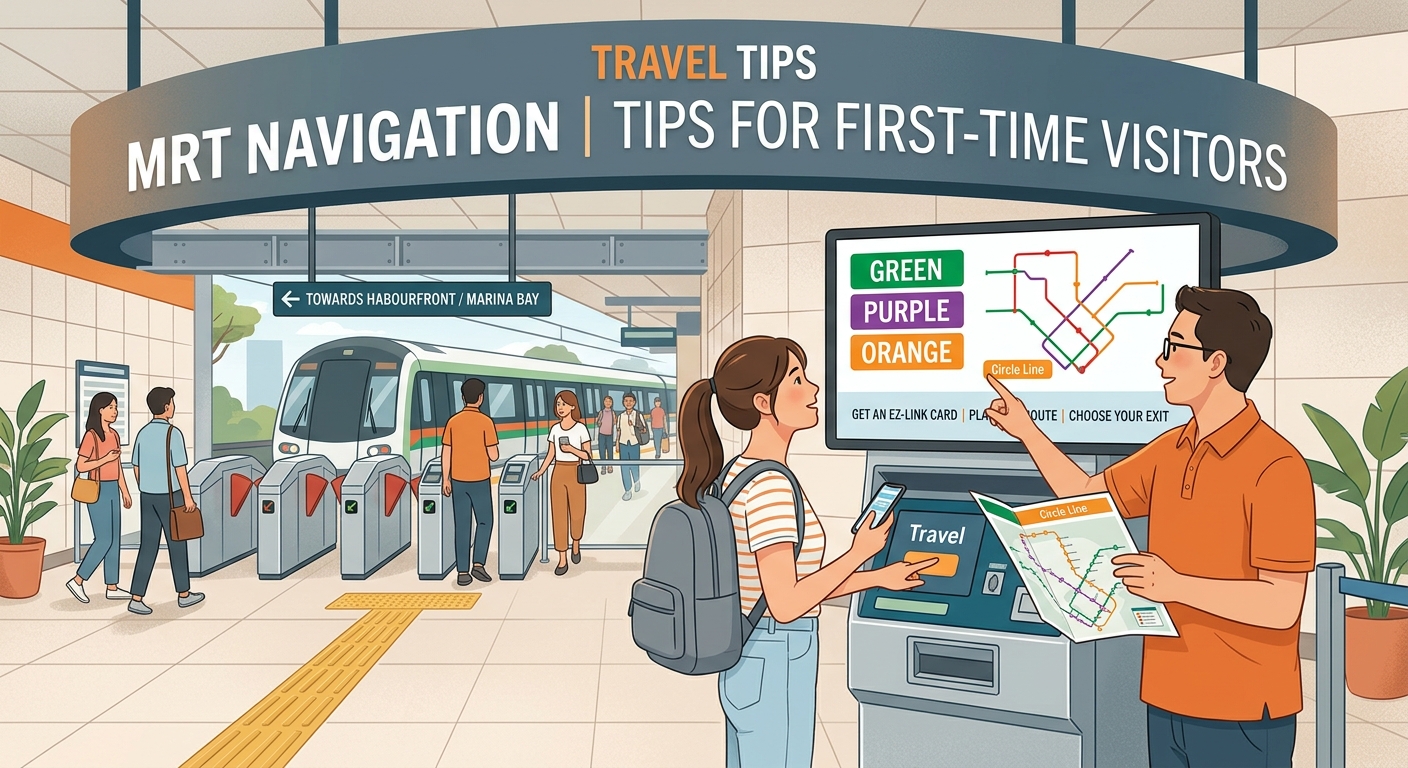
Singapore accepts several payment methods on the MRT. You don’t need to buy a physical ticket unless you prefer one.
Contactless Bank Cards and Mobile Wallets
Tap your Visa, Mastercard, or UnionPay card at the gantry. You can also use Apple Pay, Google Pay, or Samsung Pay on your phone or watch. The system calculates your fare when you tap out. Fares range from S$0.93 to S$2.38 for most journeys. Peak-hour surcharges add about S$0.25 during morning and evening rush periods.
EZ-Link and NETS FlashPay Cards
These stored-value cards cost S$5 for the card itself, plus a minimum top-up of S$7. You can buy them at any station ticket office or 7-Eleven. Top up at general ticketing machines, convenience stores, or using the SimplyGo app. EZ-Link cards work on buses, trains, and even at some food courts.
Singapore Tourist Pass
If you’re planning multiple trips in one day, the Tourist Pass offers unlimited rides. It costs S$10 for one day, S$16 for two days, or S$20 for three days. You’ll also pay a S$10 refundable deposit. Buy it at selected MRT stations, including Changi Airport, Orchard, and Chinatown. The pass covers trains and basic bus services.
Step-by-Step Guide to Your First MRT Journey
Here’s how to ride the MRT from start to finish.
-
Find the nearest station. Look for the MRT logo, a red circle with a white train symbol. Station entrances are usually at street level or inside shopping malls.
-
Locate the platform. Check the overhead signs for your destination line and direction. Platforms are labelled by the final station name, not by compass direction. For example, “Towards Pasir Ris” or “Towards Joo Koon.”
-
Tap in at the gantry. Hold your card or phone against the reader until you hear a beep and see a green light. If it flashes red, your card may have insufficient value.
-
Board the train. Wait for passengers to exit before stepping in. Priority seats are marked near the doors. Stand behind the yellow line if the train is full.
-
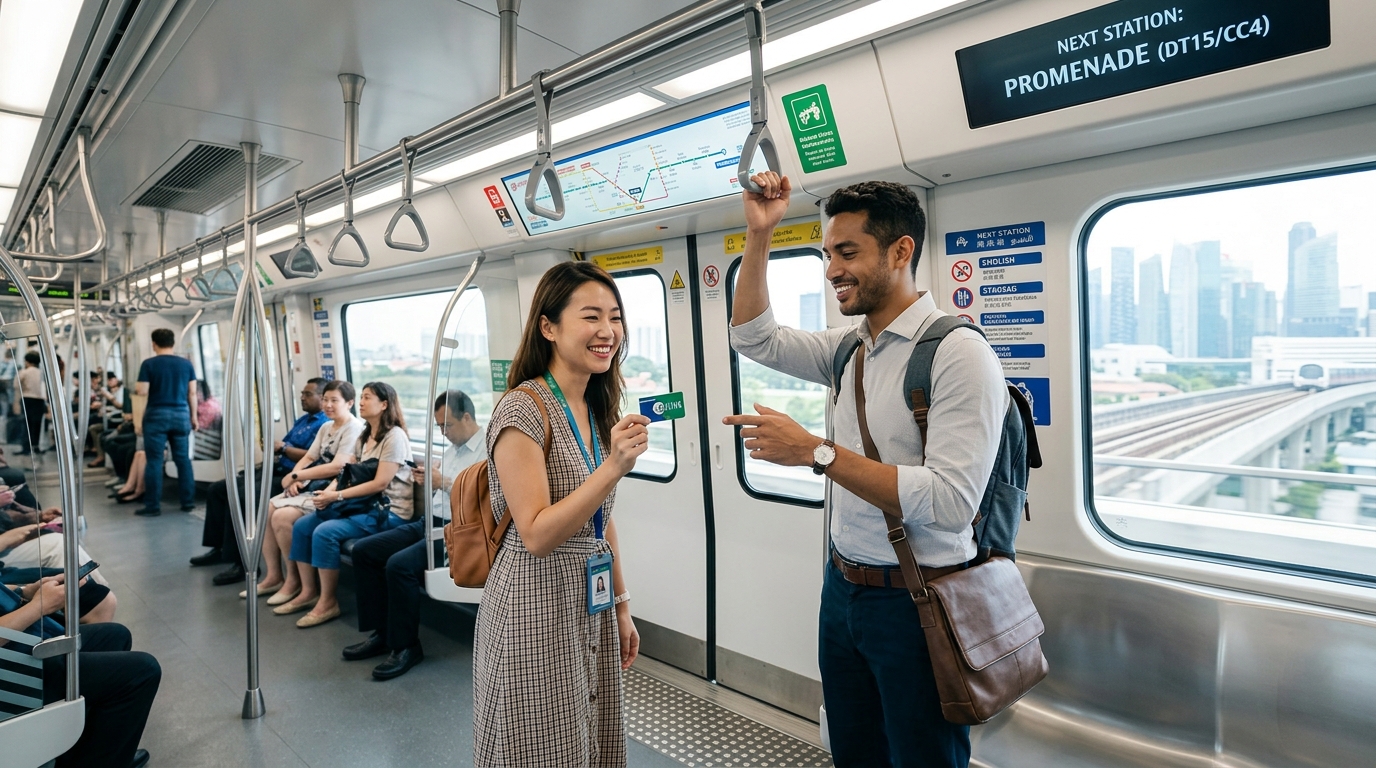
Listen for announcements. The system announces each station in English, Mandarin, Malay, and Tamil. Digital screens inside the train show upcoming stops.
-
Transfer if needed. Follow signs for your connecting line. You won’t need to tap out and back in at interchange stations. Just walk to the correct platform.
-
Tap out at your destination. Use the same card or device you tapped in with. The fare is deducted automatically.
Navigating Transfers and Interchanges
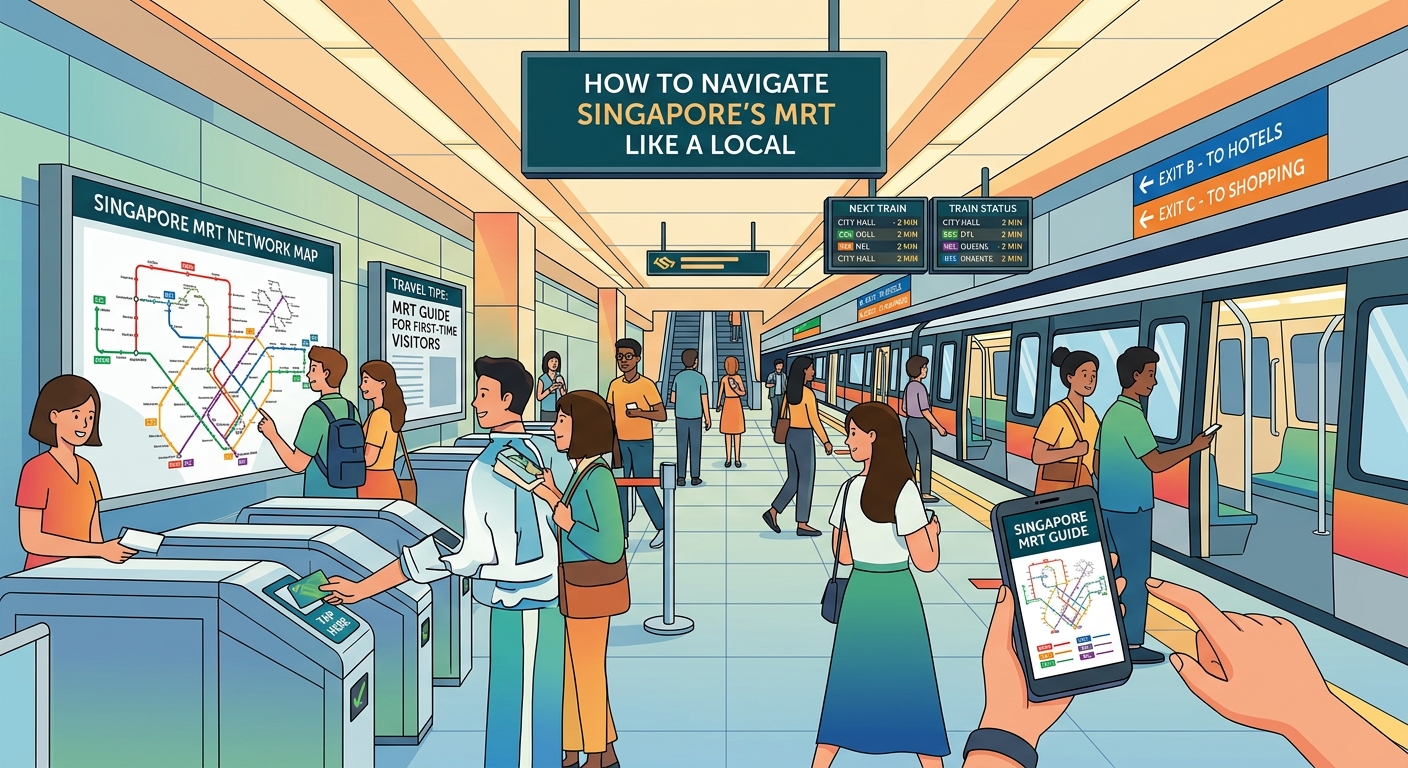
Interchange stations can feel overwhelming at first. They’re large, with multiple exits and connecting platforms. Look for overhead signs in English. They show line colours, station codes, and platform directions.
Some interchanges require a short walk. At Raffles Place, the North-South and East-West platforms are on different levels. At Bayfront, the Downtown and Circle Line platforms are about 200 metres apart. Follow the colour-coded signs on the floor and walls.
If you’re travelling with luggage, use the lifts. Every station has at least one lift connecting the street level to the platform. Escalators are faster but can get crowded during peak hours.
“Interchange stations are designed for efficiency, not comfort. Give yourself an extra five minutes if you’re transferring during rush hour. The crowds move fast, but the signage is excellent.” — Local commuter with eight years of daily MRT use
Common Mistakes Tourists Make on the MRT
| Mistake | Why It Happens | How to Avoid It |
|---|---|---|
| Tapping the wrong card | Carrying multiple contactless cards in one wallet | Keep your payment card separate or use a phone wallet |
| Missing the last train | Assuming trains run all night | Check the last train time on the MyTransport app before heading back |
| Standing on the right side of the escalator | Different countries have different conventions | Stand on the left, walk on the right in Singapore |
| Exiting at the wrong station exit | Stations have multiple exits leading to different streets | Check the exit number on Google Maps before you tap out |
| Forgetting to tap out | Rushing to leave the station | You’ll be charged the maximum fare if you don’t tap out |
Peak Hours and When to Travel
Weekday mornings from 7am to 9am are the busiest. Trains fill up with office workers and students. Evening peak hours run from 5pm to 8pm. If you’re heading to popular tourist spots like Marina Bay Sands or Gardens by the Bay, travel mid-morning or early afternoon.
Weekends are less crowded, except near shopping districts like Orchard Road and Bugis. Public holidays see lighter traffic in the CBD but heavier crowds near attractions and parks.
Travelling during off-peak hours also saves you money. Peak-hour surcharges don’t apply before 7am, between 9am and 5pm, or after 8pm on weekdays. Weekends and public holidays are always off-peak.
MRT Etiquette and Unwritten Rules
Singaporeans queue in two lines at platform doors. Stand to the side if you’re not boarding. Let passengers exit before you step in. Don’t eat or drink on trains or in paid areas. The fine is S$500. Chewing gum is allowed, but spitting it out isn’t.
Keep your phone on silent or use headphones. Avoid video calls. If you’re travelling in a group, speak softly. Priority seats are for elderly passengers, pregnant women, and people with disabilities. Offer your seat if you see someone who needs it.
Backpacks and large bags should be placed on the floor or between your feet. Don’t block the doors or lean against them. If you’re standing near the door and not getting off soon, step out briefly to let others exit, then step back in.
Connecting the MRT to Major Attractions
Most of Singapore’s top attractions are within walking distance of an MRT station. Marina Bay Sands is a five-minute walk from Bayfront station (CE1). Gardens by the Bay connects directly to the same station. Sentosa is accessible via HarbourFront (NE1/CC29), then a short monorail ride.
Chinatown station (NE4/DT19) puts you in the heart of the historic district. Little India station (NE7/DT12) is surrounded by colourful shophouses and temples. Orchard Road shopping starts at Orchard station (NS22) and extends to Somerset (NS23) and Dhoby Ghaut (NS24/NE6/CC1).
Changi Airport has its own station (CG2) on the East-West Line. The journey to the city centre takes about 30 minutes. If you’re staying near boutique hotels that locals recommend, check which MRT line is closest before you book.
Using Apps to Plan Your Routes
The MyTransport app is the official tool for route planning. It shows live train arrival times, service disruptions, and the fastest route between two stations. You can also check bus connections and taxi availability.
Google Maps works well for MRT navigation. Enter your destination, and it will suggest the best route, including walking time and transfers. Citymapper is another popular option. It shows fare estimates, platform numbers, and even which carriage to board for the fastest exit at your destination.
Download one of these apps before you arrive. You’ll need mobile data or WiFi to use them. Most stations offer free WiFi, but it’s not always reliable.
Accessibility Features for Travellers with Mobility Needs
Every MRT station has lifts, tactile flooring, and accessible toilets. Platform screen doors prevent accidents. Gaps between the train and platform are minimal. Priority seats are located near the doors on every carriage.
If you’re using a wheelchair or stroller, look for the wheelchair symbol on station maps. It shows the location of lifts and ramps. Staff at ticket offices can assist with directions or gate access.
Audio announcements and visual displays make it easy to track your journey. Station names are announced in four languages. Digital screens show the next stop and transfer options.
What to Do If Something Goes Wrong
If you tap in but can’t complete your journey, visit the passenger service centre before you leave the station. Staff can adjust your fare or issue a refund. If you lose your EZ-Link card, the stored value is not recoverable. Contactless bank cards and mobile wallets are safer because they’re linked to your account.
If you miss your stop, don’t panic. Get off at the next station, cross to the opposite platform, and take the train back. You won’t be charged extra as long as you complete your journey within two hours.
For emergencies, press the red button on the platform or inside the train. It connects you to station staff. Medical emergencies are rare, but staff are trained in first aid.
MRT-Friendly Neighbourhoods Worth Visiting
Some neighbourhoods are best experienced by MRT. Tiong Bahru’s charm is a short walk from Tiong Bahru station (EW17). The area is known for its pre-war architecture, independent cafes, and weekend markets.
Katong and Joo Chiat are accessible via Paya Lebar (EW8/CC9) or Dakota (CC8). These neighbourhoods showcase Peranakan culture, colourful shophouses, and traditional bakeries. Holland Village, near Holland Village station (CC21), is popular for brunch spots and boutique shopping.
If you’re interested in hawker centres where locals eat, Chinatown Complex is near Chinatown station. Tekka Centre is next to Little India station. Old Airport Road Food Centre is a 10-minute walk from Dakota station.
Late-Night Travel and Alternatives
The MRT stops running just after midnight. If you’re out late at rooftop bars and sky-high experiences, plan your return trip before the last train. Night buses run along major routes, but they’re slower and less frequent.
Taxis and ride-hailing services like Grab are widely available. Fares increase after midnight due to surcharges. If you’re staying near an MRT station, consider heading back before 11:30pm to catch the last train.
Some stations close earlier on Sundays and public holidays. Check the MyTransport app for updated schedules.
Why the MRT Beats Every Other Option
Taxis get stuck in traffic. Buses take longer. Walking in Singapore’s heat is exhausting. The MRT is air-conditioned, predictable, and affordable. A single journey costs less than a cup of coffee. You’ll reach most destinations faster than any other mode of transport.
The system is also safe. Stations have security cameras, and staff patrol regularly. Crime on the MRT is extremely rare. You can travel alone at any time of day without concern.
For tourists, the MRT removes the stress of navigation. You don’t need to speak the local language or haggle over fares. Tap in, ride, tap out. It’s that simple.
Getting Comfortable with the System Takes One Day
Your first MRT ride might feel intimidating. By your second or third trip, you’ll move through stations like someone who’s lived here for years. The system is designed for clarity. Signs are in English. Maps are everywhere. Locals are helpful if you look lost.
Start with a simple journey between two major stations. Try Orchard to Marina Bay or Chinatown to Little India. Once you’ve mastered the basics, you’ll feel confident travelling anywhere on the island. The MRT isn’t just transport. It’s your gateway to experiencing Singapore the way locals do.