Master Singapore Like a Pro: 12 Insider Hacks for a Flawless 2026 Visit
Singapore runs on a different rhythm than most cities. You can feel it the moment you step out of Changi Airport. The air is thick and warm. The trains run like clockwork. And somewhere, a hawker is frying the best plate of carrot cake you have ever tasted. But here is the thing. A lot of visitors miss the real Singapore because they stick to the guidebook script. They queue for an hour at a famous chicken rice stall when a better one is a five minute walk away. They pay tourist prices for souvenirs that locals would never buy. They spend their entire trip on the main island without realising that the best view of the skyline is actually from a tiny park on the East Coast.
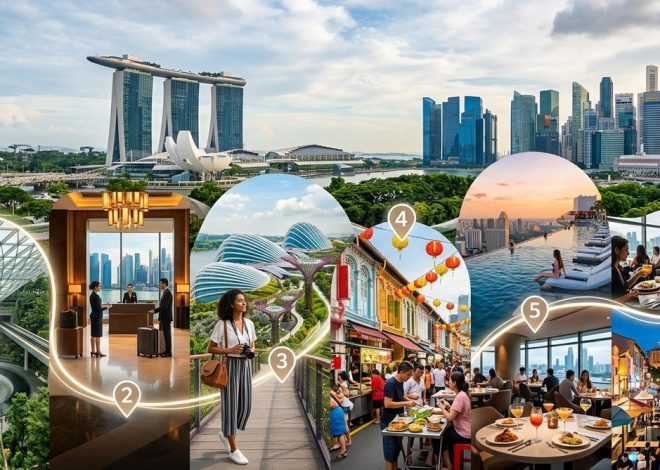
This guide is for the detail oriented traveler. Whether you are visiting for the first time or coming back for more in 2026, these 12 insider hacks will save you time, money, and a whole lot of frustration.
The best Singapore travel tips for 2026 focus on three things: timing your visits to avoid peak crowds, eating where locals actually queue, and using technology to skip lines and save money. Master these and you will experience a side of Singapore that most tourists miss entirely. Your wallet and your taste buds will thank you.
1. Use the MRT Like a True Local
The Mass Rapid Transit system is your best friend. It is clean, safe, and covers almost every corner of the island. But here is the hack most tourists overlook.
Get a Singapore Tourist Pass instead of a standard EZ-Link card. The pass gives you unlimited rides for one day (S$22), two days (S$29), or three days (S$34). If you plan to take more than three MRT trips in a day, the Tourist Pass pays for itself. You also skip the queue at ticketing machines.
One more thing. Download the MyTransport.SG app before you arrive. It shows real time bus arrivals and MRT disruptions. In 2026, the Thomson-East Coast Line will be fully operational, making trips to places like Sungei Bedok and the Founders Memorial much easier. Check our guide to navigating Singapore’s MRT like a local for a full breakdown of the latest routes.
2. Eat at Hawker Centres, But Avoid the Famous Ones
You have heard of Maxwell Food Centre and Lau Pa Sat. They are good. But they are also packed with tourists. Here is a better strategy.
Visit the hawker centres in residential estates. The food is just as good, and the prices are lower. Try these three:
- Old Airport Road Food Centre for the best hokkien prawn mee in Singapore.
- Chomp Chomp Food Centre in Serangoon for satay and barbecued stingray.
- Yishun Park Hawker Centre for a quieter, family friendly atmosphere.
The real trick is timing. Go for lunch at 11:30 am or dinner at 5:30 pm. You will beat the lunch and dinner rushes by about 30 minutes. And always bring a packet of tissues to chope (reserve) your seat. It is a local custom that still works in 2026.
For a deeper look at the best hawker spots, read our guide to hawker centres in Singapore where locals actually eat.
3. Skip the Marina Bay Sands Skypark Observation Deck
The view from the Skypark is stunning. But you pay S$26 for it, and you share the space with hundreds of other tourists. There is a better way.
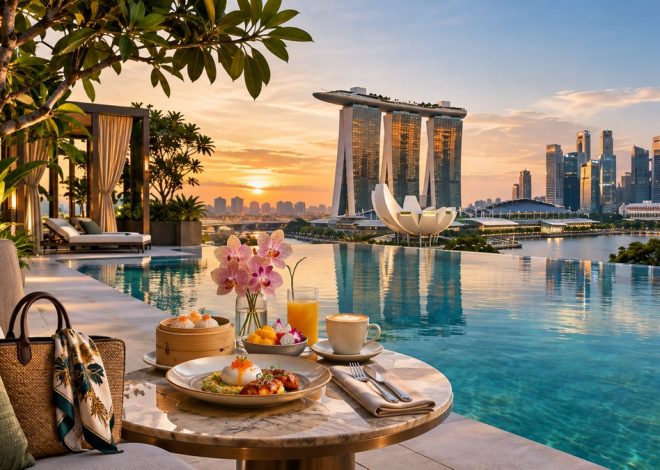
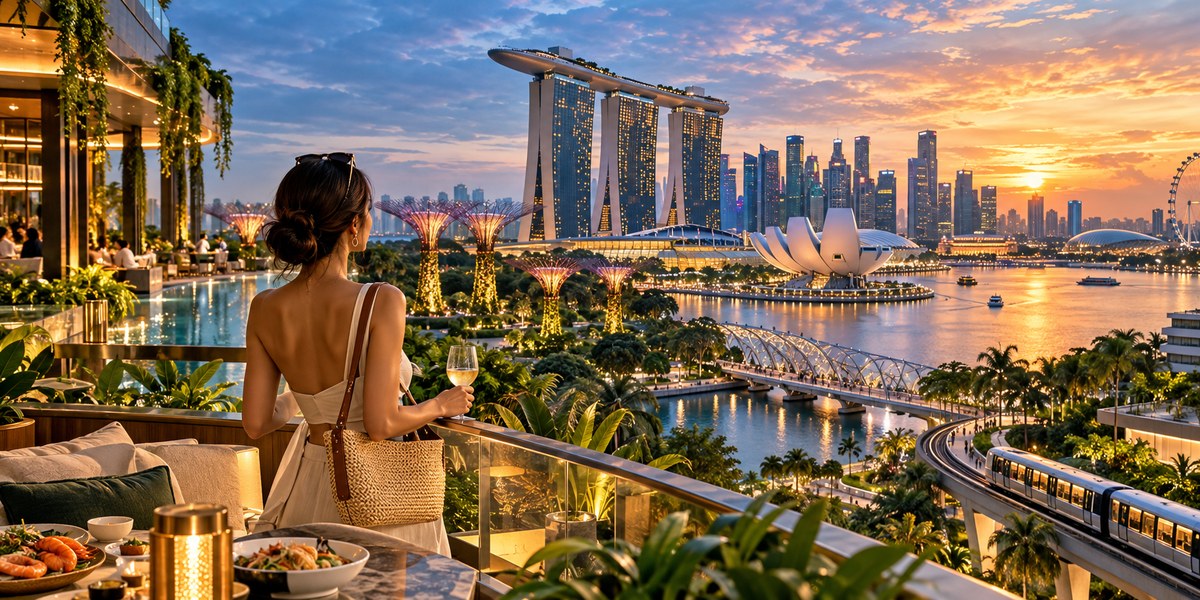
Book a stay or a drink at one of the hotels with rooftop bars that offer the same view for free. The best option is the Ce La Vi restaurant and bar on the 57th floor of Marina Bay Sands. You do not need a reservation for the bar. Just walk in, order a cocktail (around S$28), and enjoy the sunset. You get the same panorama without the entry fee.
Another hidden spot is the Lantern bar at the Fullerton Bay Hotel. It sits right on the water and offers a direct view of the Marina Bay skyline. The crowd is smaller, and the vibe is more relaxed. For more options, see our guide to Singapore’s best rooftop bars.
4. Master the Art of the “Chope” Culture
Singaporeans have a unique way of reserving tables in hawker centres. They place a packet of tissues on the seat. This is called “choping” a seat. It is a social contract that everyone respects.
Here is how to use it properly.
- Walk around the hawker centre first to find an empty table.
- Place your packet of tissues (or a small personal item) on the seat.
- Go order your food. The seat is yours.
- Do not chope a table and then leave the hawker centre. That is bad form.
If you forget to bring tissues, a small umbrella or a water bottle works too. Just do not use your phone or wallet. That is asking for trouble.
5. Time Your Visit to the Gardens by the Bay
The Gardens by the Bay is spectacular. But it is also one of the most crowded attractions in Singapore. The secret is to visit at the right time.
Go on a weekday, ideally Tuesday or Wednesday. Arrive at 10:00 am when the gates open. You will have the Cloud Forest and Flower Dome almost to yourself for the first hour. Then, around 3:00 pm, leave the conservatories and walk through the outdoor Supertree Grove. The heat is less intense, and the light is perfect for photos.
Stay until 7:45 pm for the Garden Rhapsody light and sound show. The best viewing spot is not directly under the Supertrees. Walk to the far end of the Supertree Grove, near the Dragonfly Lake. You get a full view of the trees without the crowds blocking your sight.
6. Know Which Apps to Download Before You Arrive
Your phone is your most powerful travel tool in Singapore. Download these five apps before you land.
- Grab for ride hailing. It is cheaper than taxis and works reliably across the island.
- MyTransport.SG for MRT and bus schedules.
- Google Maps for walking directions. It works well in Singapore.
- TripAdvisor for restaurant reviews. But cross reference with Google reviews for accuracy.
- Singtel Prepaid Hi!App if you plan to get a local SIM card.
One app to avoid is Uber. It was absorbed by Grab in 2018 and is no longer available in Singapore.
For a full list of essential apps, check our guide to 10 essential Singapore travel apps every visitor should download.
7. Book Your Hotel in a Neighbourhood, Not a Tourist Zone
Many visitors default to Orchard Road or Marina Bay. These areas are convenient, but they are also the most expensive and the least local. In 2026, the best hotel experiences are in the neighbourhoods.
Consider these options:
| Neighbourhood | Vibe | Best For | Approximate Nightly Rate (SGD) |
|---|---|---|---|
| Tiong Bahru | Hip, artsy, vintage cafes | Solo travelers, couples | $180 – $350 |
| Katong / Joo Chiat | Peranakan heritage, local food | Food lovers, culture seekers | $150 – $300 |
| Bugis / Kampong Glam | Vibrant, historic, budget friendly | Young travelers, backpackers | $100 – $250 |
| Tanjong Pagar | Central, business district, quiet | Business travelers, couples | $200 – $400 |
Tiong Bahru is a personal favourite. It has a charming market, excellent coffee shops, and a relaxed pace. The hotels there are boutique and stylish. For a curated list, read our guide to 11 best boutique hotels in Singapore that locals actually recommend.
8. Use the “Rainy Day” Strategy for Indoor Attractions
Singapore has two monsoon seasons. The northeast monsoon runs from December to March, and the southwest monsoon runs from June to September. Rain is common, but it usually comes in short, heavy bursts.
Plan your indoor attractions for the afternoon. The rain typically starts around 2:00 pm and lasts for one to two hours. Use that time to visit:
- The National Museum of Singapore
- The ArtScience Museum at Marina Bay Sands
- The Asian Civilisations Museum
- Jewel Changi Airport (which is an attraction in itself)
If you are caught in a downpour without an umbrella, head to any shopping mall. They are all connected by underground walkways in the city centre. You can walk from City Hall to Marina Bay without stepping outside.
Our guide to spending a perfect rainy day in Singapore has more ideas.
9. Shop at Local Markets, Not Souvenir Shops
The souvenir shops on Orchard Road sell the same keychains and Merlion statues you can find anywhere. They are overpriced and mass produced. Instead, shop at local markets for authentic items.
- Chinatown Street Market for traditional crafts and calligraphy.
- Little India Arcade for spices, textiles, and brassware.
- Katong Square for vintage Peranakan tiles and antiques.
- Haji Lane for independent fashion boutiques and handmade jewellery.
Bargaining is acceptable at Chinatown and Little India, but keep it polite. Start at 70% of the asking price and settle around 85%. Do not bargain at Haji Lane. Those are fixed price boutiques.
For a complete guide, see our list of best local markets in Singapore for authentic souvenirs.
10. Understand the “Service Charge” Trap
Singapore restaurants add a 10% service charge to your bill. This is standard. But many tourists are caught off guard when they see the final total.
Here is how it works:
- The menu price does not include the service charge or GST (goods and services tax).
- The service charge is 10% of the food and beverage total.
- GST is 9% on top of the service charge.
So a dish listed at S$20 will actually cost you around S$23.98 after all taxes. This is normal. Do not tip on top of this unless the service was exceptional. Tipping is not expected in Singapore.
For more details, read our complete guide to money and tipping in Singapore.
11. Visit Sentosa on a Weekday Morning
Sentosa Island is a popular weekend getaway for locals. That means it gets crowded on Saturdays and Sundays. If you want to enjoy the beaches, the S.E.A. Aquarium, or Universal Studios without the queues, go on a weekday.
Arrive at 10:00 am when the attractions open. The temperature is cooler, and the crowds are thin. By noon, the tour buses start arriving. That is your cue to head back to the mainland for lunch.
If you are staying on Sentosa, consider booking a hotel with a beachfront pool. The guide to Sentosa Island stays covers which resorts offer the best value.
12. Pack for the Humidity, Not the Heat
Many first time visitors pack for 30 degree heat. That is a mistake. The real issue is the humidity. It sits around 80% to 90% year round. You will sweat through a cotton t shirt within 30 minutes of stepping outside.
Here is what to pack:
- Lightweight, breathable fabrics like linen or bamboo.
- A portable fan. The small handheld ones are a lifesaver.
- A reusable water bottle. Tap water in Singapore is safe to drink.
- An umbrella. It works for both sun and rain.
- A light jacket or cardigan. Air conditioning in malls and MRT trains is set to arctic levels.
Do not bother with heavy jeans or leather shoes. You will regret them by lunchtime. Our guide to Singapore’s weather and what to pack has a full packing list.
“The best advice I give to friends visiting Singapore is this: slow down. Do not try to see everything. Pick three things you really want to do and do them well. The rest will follow.”
— Wei Ming, Singaporean travel blogger
Your 2026 Singapore Trip Starts Here
Singapore rewards the traveler who plans smart, not the one who plans hard. Use these 12 hacks to skip the queues, save your cash, and eat the food that locals actually love. Book your hotel in a neighbourhood that fits your style. Download the right apps. And always, always carry a packet of tissues.
The city is waiting for you. Make your 2026 visit the one you remember for all the right reasons.