Is Tipping Expected in Singapore? Your Complete Guide to Service Charges and Gratuities
You’ve just finished a lovely meal at a hawker centre in Singapore. The bill comes to S$12. You reach for your wallet, wondering whether to leave a few extra dollars on the table. The person at the next table gets up and leaves exact change. Now you’re confused.
Welcome to one of the most misunderstood aspects of visiting Singapore.
Tipping in Singapore is not expected or required. Most establishments include a 10% service charge in your bill, making additional gratuities unnecessary. While small tips are appreciated in luxury hotels and for exceptional service, locals rarely tip. Understanding this cultural norm helps you budget accurately and avoid social awkwardness during your stay.
Understanding Singapore’s Service Charge System
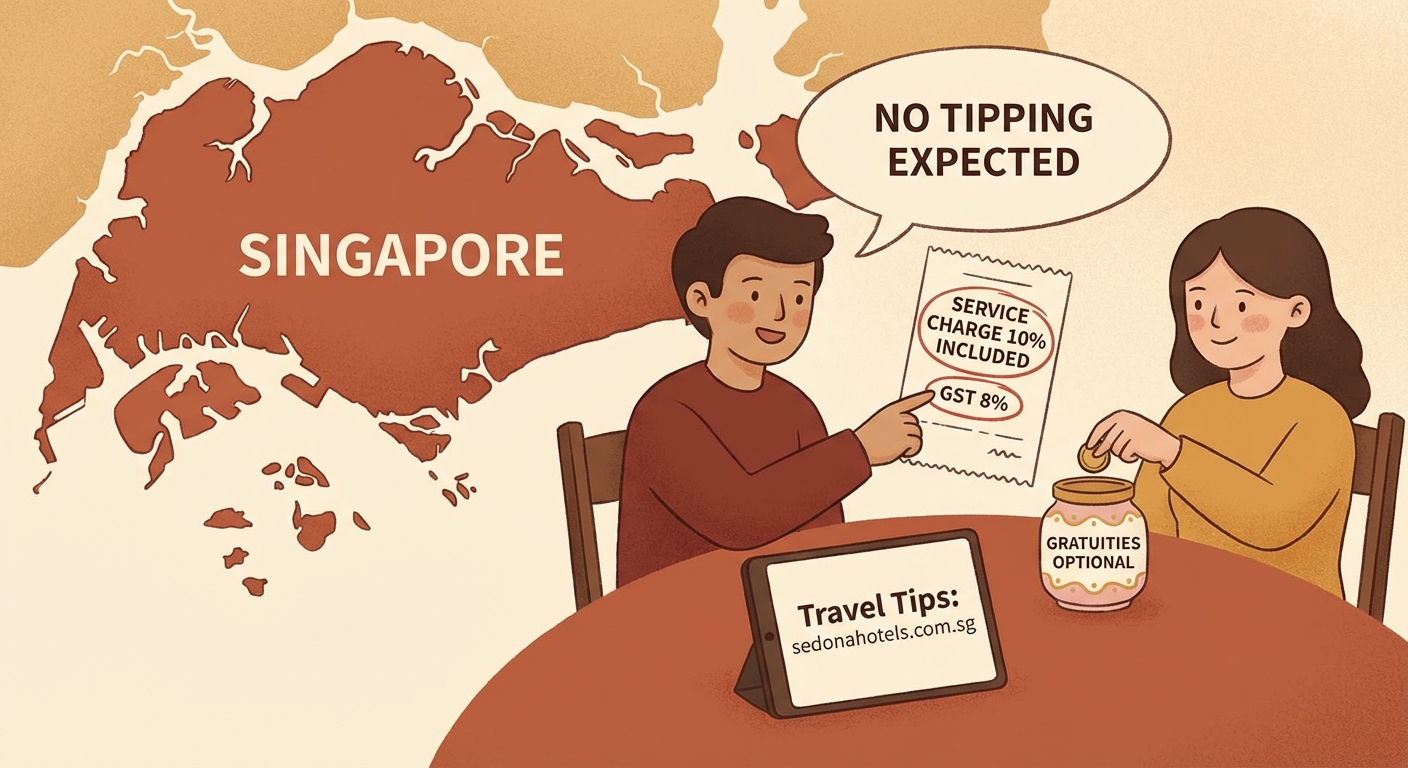
Most restaurants, hotels, and cafes in Singapore automatically add a 10% service charge to your bill.
This charge appears as a separate line item, usually marked as “SVC” or “Service Charge.”
The service charge goes directly to the establishment, not to individual staff members. Some businesses distribute portions to employees, but this varies by company policy.
You’ll also see GST (Goods and Services Tax) at 9% on most bills. Together with the service charge, your final bill typically runs about 19% higher than menu prices.
This system eliminates the need for tipping. The service charge is meant to cover gratuity, so leaving extra cash isn’t expected.
Where Tipping Never Happens
Certain places in Singapore have zero tipping culture. Locals never leave gratuities in these situations, and doing so might actually confuse staff.
Hawker centres and coffee shops operate on a no-tipping basis. These casual dining spots serve affordable local food. You pay exact change or round down. Leaving money on the table might prompt someone to chase you down, thinking you forgot your change.
Taxis and ride-hailing services don’t expect tips. Drivers appreciate if you round up to the nearest dollar for convenience, but it’s not required. Most passengers pay the exact meter fare.
Retail shops and supermarkets never accept tips. Cashiers and sales assistants receive salaries and would likely refuse any offered gratuity.
Public transport like the MRT and buses operates on exact fare systems. There’s no opportunity or expectation to tip.
When Small Tips Are Appreciated
A few situations exist where modest tipping is becoming more common, especially in upscale establishments catering to international visitors.
Hotels and Hospitality
Luxury hotels represent the main exception to Singapore’s no-tipping rule.
Bellhops who carry your luggage to your room might receive S$2 to S$5, depending on the number of bags and hotel tier. This practice is more common at five-star properties along Orchard Road and Marina Bay.
Housekeeping staff might find S$2 to S$5 left on the pillow appreciated, though this remains uncommon even in luxury hotels.
Concierges who go above and beyond, securing last-minute restaurant reservations or arranging special experiences, might receive S$10 to S$20 for exceptional service.
Room service already includes the service charge, so additional tipping is unnecessary.
Fine Dining Restaurants
High-end restaurants with the 10% service charge don’t require tips. However, some diners leave an additional 5% for truly outstanding service.
This practice is entirely optional and more common among international visitors than locals.
If you’re visiting one of Singapore’s Michelin-starred restaurants, the bill already reflects premium pricing and service charges. Additional gratuity is a personal choice, not an expectation.
Spas and Wellness Services
Spa therapists sometimes receive small tips of S$5 to S$10 for exceptional treatments, particularly at luxury hotel spas.
Neighbourhood spas and massage centres don’t expect tips. The service charge covers gratuity.
Tour Guides
Private tour guides who provide personalised, multi-hour experiences might receive S$10 to S$20 per person for excellent service.
Group tour prices typically include all costs. Tipping the guide is appreciated but not required.
How to Tip When You Choose To
If you decide to leave a gratuity, follow these practical steps to avoid confusion.
-
Use cash whenever possible. Singapore still operates largely on cash for small transactions, and tips in cash go directly to the recipient.
-
Hand the tip directly to the person who provided service. Don’t leave it on tables or counters where it might be mistaken for forgotten change.
-
Offer the tip discreetly. Loud announcements or showy gestures feel uncomfortable in Singapore’s reserved culture.
-
Time your tip at the end of service. Don’t tip upfront, as it might be misinterpreted.
If you only have card payments available, some hotel systems allow you to add gratuity when signing the bill. Ask if this option exists.
“In my 15 years working in Singapore hospitality, I’ve learned that genuine appreciation matters more than money. A sincere thank you and positive review often mean more to staff than a few extra dollars.” — Hotel manager, luxury property in Singapore
Common Tipping Mistakes Visitors Make
Understanding what not to do helps you navigate Singapore’s tipping culture smoothly.
| Mistake | Why It’s Wrong | What to Do Instead |
|---|---|---|
| Tipping at hawker centres | Creates confusion; locals never do this | Pay exact amount or accept change |
| Leaving coins on restaurant tables | Might be seen as forgotten change | If tipping, use notes and hand directly |
| Tipping taxi drivers heavily | Sets unrealistic expectations | Round up to nearest dollar at most |
| Adding tips to already service-charged bills | Paying twice for the same thing | Check bill carefully before adding extra |
| Tipping government service staff | Against regulations for civil servants | Simply say thank you |
Budgeting for Your Singapore Trip
Knowing that tipping isn’t required significantly impacts your travel budget.
When you’re calculating how much a Singapore holiday actually costs, you can rely on menu prices plus the standard 10% service charge and 9% GST.
A S$50 meal costs S$59.50 after charges. No additional 15% to 20% tip like in North America.
This transparency makes budgeting easier. The price you see (plus the standard charges) is what you pay.
For a week-long trip, you might set aside S$50 to S$100 for discretionary tipping at luxury hotels. Most travellers spend far less, or nothing at all.
Cultural Context Behind the No-Tipping Norm
Singapore’s approach to tipping reflects broader cultural values.
The service charge system ensures fair, predictable compensation for workers. Employers bear responsibility for adequate wages, not customer generosity.
This creates consistency. Service quality doesn’t depend on a staff member’s ability to charm tips from customers.
The culture values efficiency and clarity. Fixed prices and included service charges eliminate the mental math and social uncertainty that tipping creates.
Many Singaporeans view excessive tipping as showing off or creating uncomfortable power dynamics. Modest, dignified interactions are preferred.
Government regulations also play a role. Civil servants and some regulated industries prohibit staff from accepting any gratuities to prevent conflicts of interest.
Comparing Singapore to Regional Neighbours
Singapore’s tipping culture differs markedly from nearby countries.
Malaysia shares similar no-tipping norms, with service charges included in most establishments.
Thailand has a growing tipping culture, especially in tourist areas. Small tips of 20 to 40 baht are becoming common.
Indonesia increasingly expects tips in tourist zones, particularly Bali, though service charges are also standard.
Vietnam operates on negotiated prices with tipping becoming more common in international hotels.
Understanding these differences helps if you’re planning a multi-country Southeast Asian trip. Don’t assume Singapore’s norms apply elsewhere.
Special Situations and Edge Cases
A few scenarios create genuine confusion about whether to tip.
Private car services booked through your hotel might include gratuity in the quoted price. Ask when booking to avoid double-tipping.
Delivery services like food delivery don’t expect tips, though the apps now include tipping options. Most locals don’t use this feature.
Salon services at neighbourhood shops don’t expect tips. High-end salons might see occasional tipping for exceptional stylists.
Valet parking at hotels might receive S$2 when retrieving your car, though this isn’t required.
Airport porters at Changi have fixed rates displayed. Pay the stated rate; additional tips aren’t expected.
What to Do If Service Is Poor
The no-tipping culture doesn’t mean you’re stuck with bad service.
Singapore has high service standards. Poor service is uncommon and taken seriously by management.
If you experience genuinely poor service:
- Speak to a manager immediately
- Provide specific, factual feedback
- Request resolution or compensation if appropriate
- Leave honest online reviews on Google or TripAdvisor
Don’t feel obligated to tip for substandard service. The service charge is already included regardless of quality.
Good establishments want to know about problems and will often offer complimentary items or discounts to make things right.
Payment Methods and Practicalities
Singapore is increasingly cashless, but cash remains useful for the rare occasions you want to tip.
Most establishments accept cards, PayNow, and digital wallets. However, tipping works best with cash.
ATMs are widespread. Withdraw small denominations (S$2, S$5, S$10 notes) if you plan to tip hotel staff.
Keep small notes separate from your main wallet for easy access.
Some hotels near Changi Airport and boutique properties have concierges who can break larger notes if you need smaller denominations.
Making Your Singapore Stay Smooth
Understanding tipping in Singapore removes one source of travel anxiety.
You won’t offend anyone by not tipping. You won’t look cheap or rude. You’re simply following local norms.
If you receive exceptional service and want to show appreciation, a small cash tip is fine. But it’s never required or expected.
This knowledge helps you focus on what matters: enjoying Singapore’s incredible food scene at hawker centres, experiencing the city’s cultural gems, and making the most of your accommodation choice.
What This Means for Your Travel Planning
Tipping in Singapore is simpler than almost anywhere else in the world.
The service charge system handles what tipping accomplishes in other countries. Your bill includes everything needed for fair staff compensation.
This transparency extends to your entire trip budget. Prices are clear. Calculations are straightforward. No hidden expectations lurk behind transactions.
When you’re planning your first Singapore visit, remember that the city’s efficiency extends to payment norms. What you see is what you pay, plus the clearly marked service charge and GST.
Save your cash for experiences, not obligatory gratuities. Spend on that extra plate of chilli crab, the rooftop cocktail with a view, or the souvenir that catches your eye at a local market.
Singapore makes travel easy in countless ways. The no-tipping culture is just one more example of a city designed for clarity and convenience.