The Ultimate Guide to Hawker Centres in Singapore: Where Locals Actually Eat
You’re standing at the entrance of a hawker centre, surrounded by the sizzle of woks, the aroma of char kway teow, and dozens of stalls calling out to you. But which one do locals queue at? How do you order without looking lost? And why is everyone leaving tissue packets on tables?
Singapore’s hawker centres are open-air food courts where locals eat daily. Success means knowing how to chope (reserve) seats, ordering in local lingo, and spotting quality stalls by queue length and awards. Bring cash, try mixed-race dishes like laksa and chicken rice, and visit centres near residential estates for authentic experiences away from tourist crowds.
What Makes Hawker Centres Different From Food Courts
Hawker centres are government-subsidised open-air complexes with individual food stalls.
Food courts sit inside malls with air conditioning and higher prices.
The average hawker meal costs $3 to $5. The same dish at a food court runs $6 to $8.
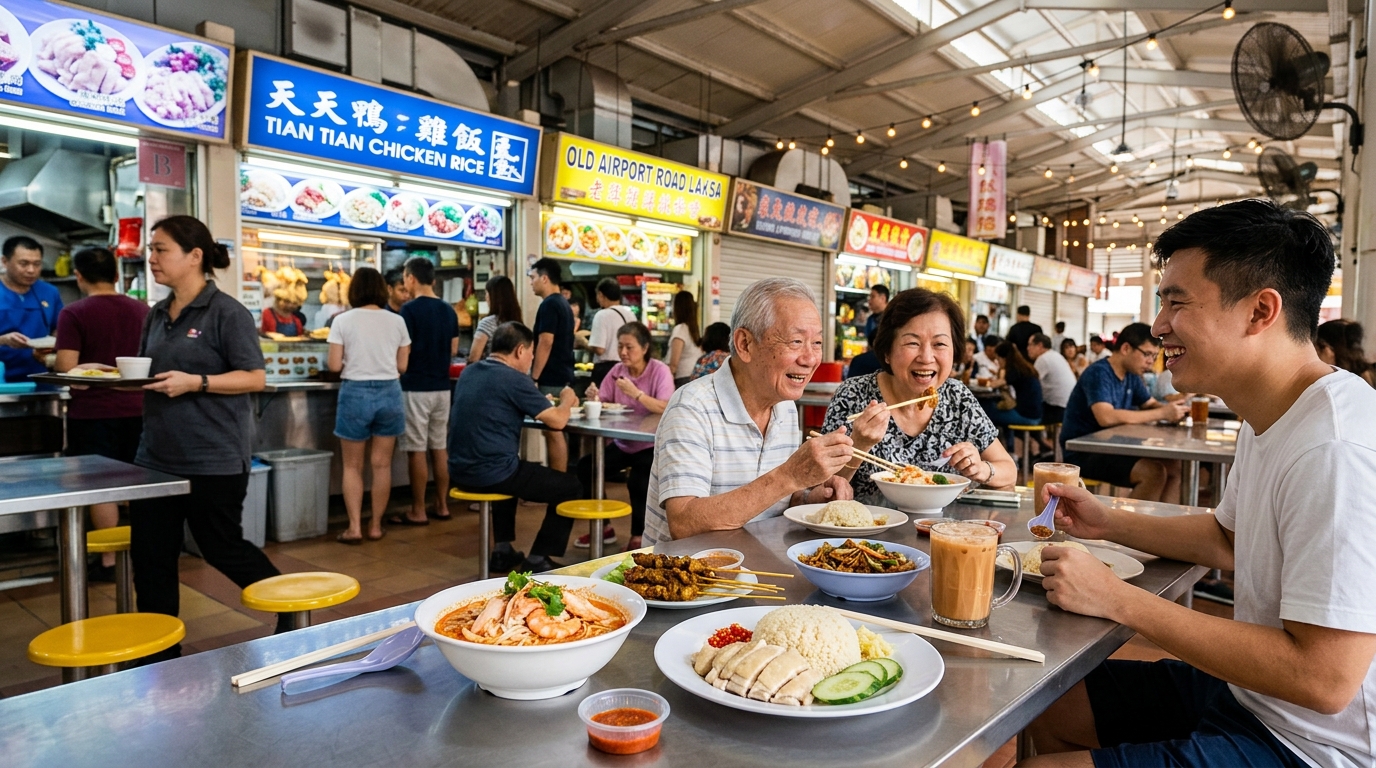
Hawker centres serve as community hubs. You’ll see office workers grabbing breakfast, retirees chatting over kopi, and families gathering for dinner.
Most hawker centres operate from 7am to 10pm, though individual stall hours vary. Some stalls open only for breakfast. Others start at lunch and run till late evening.
The seating is communal. You don’t order from a specific stall and sit in their section. You grab any available table, then walk around ordering from different stalls.
How to Chope a Seat Without Offending Anyone
Chope means reserving a table by leaving an item on it.
Locals use tissue packets, umbrellas, or name cards. Never remove someone else’s chope items, even if the table looks abandoned.
Here’s how to secure your spot properly:
- Enter the hawker centre and scan for tables with no items on them
- Place your tissue packet, phone case, or small item on the table
- Walk to the stalls and order your food
- Return to your reserved table to eat
During peak lunch hours (12pm to 1.30pm), finding a table gets competitive. Arrive by 11.30am or wait till 2pm for easier seating.
Some hawker centres have dedicated cleaners who clear tables. They wear coloured vests and push trolleys. Don’t feel obliged to return your tray at these centres, though you can if you prefer.
At centres without cleaners, stack your plates and bowls neatly before leaving.
Where Locals Actually Eat
Tourist guidebooks push the same five hawker centres. Locals eat elsewhere.
Residential estate hawker centres serve better food at lower prices because they depend on repeat customers, not one-time visitors.
Try these neighbourhood centres:
- Whampoa Makan Place (Balestier area)
- Bedok Interchange Hawker Centre
- Taman Jurong Market & Food Centre
- Ang Mo Kio Avenue 4 Block 628 Market
- Clementi 448 Market & Food Centre
You’ll notice fewer tourists and more families. Stall owners recognise regular customers and adjust spice levels or portions accordingly.
The ultimate first-timer’s guide to navigating Singapore like a local covers more insider tips for avoiding tourist traps.
Spotting Quality Stalls in 30 Seconds
Long queues signal good food, but not always. Some stalls are slow, not popular.
Look for these markers instead:
Awards and certifications hang prominently. The Bib Gourmand (Michelin Guide recognition) and Heritage Hawker awards indicate consistent quality.
Older hawkers with young assistants suggest the business is successful enough to hire help or pass down to the next generation.
Handwritten signs with specific instructions (“No pork lard”, “Extra chilli 50 cents”) show the stall cares about customisation.
Ingredients visible at the front mean the stall has nothing to hide. Fresh prawns, vegetables, and meats should look vibrant, not grey or wilted.
Avoid stalls with pre-cooked food sitting under heat lamps. Exceptions include chicken rice and roasted meats, which are meant to be displayed.
Ordering Without the Tourist Tax
Some stalls charge tourists more. Here’s how to order like a local.
Use these exact phrases:
- “One chicken rice, less rice” (Standard order with smaller portion of rice)
- “Mee goreng, no spicy” (Fried noodles without chilli)
- “Laksa, extra hum” (Laksa with more cockles)
Never say “I’ll have the…” or “Can I get…”. Just state your order directly.
When the hawker asks “Eat here or take away?”, answer “Eat here” if you’re staying. Take away orders come in styrofoam boxes and cost the same.
For drinks, order at the drinks stall separately:
- “Kopi” (Coffee with condensed milk)
- “Teh” (Tea with condensed milk)
- “Kopi-O” (Coffee with sugar, no milk)
- “Teh-O” (Tea with sugar, no milk)
Add “kosong” for no sugar. Add “siew dai” for less sugar. Add “gao” for stronger brew.
Most stalls accept PayNow (Singapore’s instant payment system), but cash remains king. Bring small notes. Many stalls can’t break a $50 note at opening time.
Five Dishes Every First-Timer Should Try
Singapore’s hawker food reflects Chinese, Malay, Indian, and Peranakan influences.
Start with these:
Chicken rice looks plain but tests a stall’s skill. The rice should be fragrant with ginger and garlic. The chicken should be tender with thin skin. Good versions come with three sauces: chilli, dark soy, and ginger paste.
Char kway teow (fried flat noodles) needs high heat and a skilled hand. Look for wok hei, the smoky flavour from proper stir-frying. Authentic versions include cockles, Chinese sausage, and bean sprouts.
Laksa combines Chinese and Malay elements. The coconut curry broth should be spicy but balanced. Toppings include prawns, fish cakes, and tau pok (fried tofu puffs).
Hokkien mee comes in two styles. The KL version is dark with thick soy sauce. The Singapore version is lighter with a prawn broth base. Both include yellow noodles, thick bee hoon, prawns, squid, and pork.
Roti prata works for breakfast or supper. Plain prata comes with curry. Egg prata includes a fried egg folded inside. Cheese prata is a modern variation that locals love.
“The best hawker food comes from stalls that have been perfecting one dish for 30 years. Don’t expect a huge menu. The smaller the menu, the better the specialisation.” – Veteran food blogger
Common Mistakes and How to Avoid Them
| Mistake | Why It Happens | What to Do Instead |
|---|---|---|
| Ordering from multiple stalls before securing a seat | Assuming you can find a table later | Chope your seat first, then order |
| Leaving your bag to reserve a table | Thinking items hold the same value | Use disposable items only; never valuables |
| Asking for mild spice and getting medium | “No spicy” isn’t specific enough | Say “no chilli at all” or “chilli on the side” |
| Walking away without your change | Stall owners keep change if you don’t wait | Stay at the counter until you receive change |
| Ordering too much food at once | Everything looks appealing | Start with one dish, then order more if hungry |
Best Times to Visit for Different Experiences
Hawker centres transform throughout the day.
Morning (7am to 10am) brings breakfast specialists. Carrot cake (fried radish cake), congee, and kaya toast stalls do their best business now. Retirees gather for kopi and newspapers.
Lunch (12pm to 2pm) sees the biggest crowds. Office workers rush in and out. Queues form at popular stalls. The energy peaks but finding seats becomes challenging.
Afternoon (3pm to 5pm) offers the quietest experience. Many stalls close for breaks, but those open serve faster with no queues. Perfect for trying dishes without pressure.
Dinner (6pm to 8pm) brings families. The atmosphere becomes more relaxed than lunch. More stalls are open compared to afternoon.
Supper (9pm to midnight) caters to night owls. Only certain hawker centres stay open late. Geylang Serai, Chomp Chomp, and Old Airport Road have active supper scenes.
Understanding the Rating Systems
Singapore’s hawker stalls collect various awards and ratings.
Michelin Bib Gourmand recognises stalls offering quality food at affordable prices (under $45 per person). Two hawker stalls have earned Michelin stars: Hawker Chan and Hill Street Tai Hwa Pork Noodle.
Heritage Hawker designation goes to stalls operating for at least 30 years with recipes passed down through generations.
Hawker Masters programme identifies skilled hawkers through a rigorous assessment process.
These awards matter, but don’t ignore undecorated stalls. Some of the best food comes from humble operations that never applied for recognition.
Local food bloggers and Instagram accounts (@sgfoodonfoot, @sgeats, @ladyironchef) provide more current recommendations than official guides.
Navigating Special Dietary Needs
Finding vegetarian, halal, or allergy-friendly options requires specific knowledge.
Halal stalls display a green certification from MUIS (Islamic Religious Council of Singapore). Many Indian Muslim stalls are halal by default. Ask if you don’t see the certificate.
Vegetarian options exist at mixed rice (economy rice) stalls, where you choose from displayed dishes. Indian stalls offer vegetarian curries, thosai, and prata. Chinese vegetarian stalls use mock meat.
Allergies need clear communication. Say “I’m allergic to [ingredient], can you make it without?” Most hawkers accommodate if possible, but cross-contamination risk exists in busy kitchens.
Peanut allergies pose challenges. Many dishes use peanut sauce or peanuts as garnish. Satay sauce, rojak, and gado-gado all contain peanuts.
Gluten-free options are limited. Rice dishes work, but soy sauce (which contains wheat) appears in many preparations.
Making the Most of Your Hawker Centre Experience
Hawker centres reward those who approach them with curiosity rather than caution.
Talk to stall owners during quiet periods. Ask about their speciality, how long they’ve been cooking, what locals order. Most are proud of their craft and happy to explain.
Don’t stick to one hawker centre. Each has different strengths. Chinatown Complex excels at Chinese regional dishes. Tekka Centre specialises in Indian food. East Coast Lagoon Food Village offers seafood.
Visit with locals if possible. They’ll introduce you to stalls, order in dialect, and explain dishes you’d otherwise miss.
Pace yourself. Hawker food is rich and portions are generous. Share dishes with companions to try more variety.
Take note of opening days. Many stalls close one day per week, usually Monday or Tuesday. Check Google Maps or call ahead for specific stalls you want to try.
Your First Hawker Centre Visit Starts Here
You now know how to chope a seat, order without hesitation, and spot quality stalls.
Start with a neighbourhood hawker centre near your accommodation. Arrive during off-peak hours for a relaxed first experience.
Order one familiar-sounding dish and one that challenges you. The contrast will teach you more about Singaporean food than playing it safe.
Bring cash, an appetite, and an open mind. The tissue packet in your bag is your ticket to eating where locals actually eat.