How to Experience Singapore’s Peranakan Cuisine Like a True Blue Local
Singapore’s Peranakan cuisine tells the story of centuries-old cultural fusion through every spice-laden bite. This distinctive food tradition, born from Chinese-Malay marriages dating back to the 15th century, creates flavours you won’t find anywhere else in the world. The cooking techniques, ingredient combinations, and family recipes have been passed down through generations, creating a culinary heritage that’s both intensely local and beautifully complex.
Peranakan cuisine Singapore blends Chinese ingredients with Malay spices and cooking methods, creating dishes like ayam buah keluak, babi pongteh, and laksa lemak. Find authentic meals at heritage restaurants in Katong and Joo Chiat, traditional family-run eateries, and select hawker stalls. Understanding the cultural significance and proper dining etiquette enriches your experience beyond just tasting the food.
Understanding What Makes Peranakan Food Different
Peranakan cooking stands apart from both Chinese and Malay cuisines through its unique preparation methods and ingredient pairings.
The rempah forms the foundation of most dishes. This aromatic spice paste requires pounding fresh ingredients like shallots, garlic, candlenuts, galangal, and dried chillies using a granite mortar and pestle. The pounding process, which can take 30 to 45 minutes, releases essential oils that pre-ground spices simply cannot match.
Traditional cooks insist on this labour-intensive method because the texture and flavour depth differ significantly from blender-processed versions.
The cuisine relies heavily on time-consuming techniques. Dishes often simmer for hours to achieve the right balance of flavours. Ayam buah keluak, one of the most iconic dishes, requires soaking the black Indonesian nuts for days, scraping out the toxic flesh, mixing it with spices and minced meat, then stuffing it back before slow-cooking.
Portuguese, Dutch, British, and Indonesian influences shaped the food over centuries. Pork features prominently despite the Malay Muslim influence, reflecting the Chinese heritage. Coconut milk appears frequently, showing Malay cooking traditions. The result is a cuisine that belongs entirely to the Straits-born Chinese communities.
Essential Dishes Every First-Timer Should Try
Start with these signature dishes to understand the flavour profile of Peranakan cuisine Singapore.
Ayam buah keluak tops most lists as the most distinctively Peranakan dish. The black Indonesian nuts create an earthy, slightly bitter flavour that pairs with chicken in a rich, dark gravy. First-timers often find the taste unusual, but it grows on you with each bite.
Babi pongteh offers a gentler introduction. This braised pork belly dish cooked with fermented soybean paste, garlic, and palm sugar delivers savoury-sweet flavours that feel more familiar to international palates. The meat becomes incredibly tender after hours of slow cooking.
Laksa lemak differs from the more common curry laksa found at hawker centres. The Peranakan version uses a coconut milk-based gravy with a more balanced, less fiery spice level. Rice noodles swim in the creamy soup alongside prawns, fish cake, and bean sprouts.
Kueh pie tee makes an excellent starter. These crispy pastry cups hold a filling of julienned turnip, prawns, and bean sprouts, topped with sweet sauce and chilli. The contrast between the crunchy shell and soft filling demonstrates the attention to texture in Peranakan cooking.
Ngoh hiang features five-spice pork rolls wrapped in bean curd skin and deep-fried. Slice them into rounds and dip in sweet sauce for a savoury-sweet combination.
Chap chye provides a vegetarian option. This mixed vegetable stew includes cabbage, mushrooms, glass noodles, and bean curd sticks braised in soybean paste. Despite containing no meat, the dish delivers deep umami flavours.
Where Locals Actually Eat Peranakan Food
The Katong and Joo Chiat neighbourhoods remain the heart of Peranakan culture in Singapore.
These adjacent districts along the East Coast house the highest concentration of authentic Peranakan restaurants. The area itself tells the story, with restored shophouses painted in pastel colours and decorated with ornate tiles typical of Peranakan architecture.
True Blue Cuisine on Armenian Street operates inside a Peranakan museum. The owner serves family recipes in a setting surrounded by antique furniture, porcelain, and embroidered textiles. Eating here feels like dining in someone’s heritage home.
Candlenut became the world’s first Michelin-starred Peranakan restaurant. Chef Malcolm Lee modernizes traditional recipes while respecting their foundations. The tasting menu format lets you sample multiple dishes in refined portions.
The Blue Ginger on Tanjong Pagar Road has served consistent Peranakan meals since 1995. The restaurant occupies a restored shophouse and maintains reasonable prices compared to newer establishments.
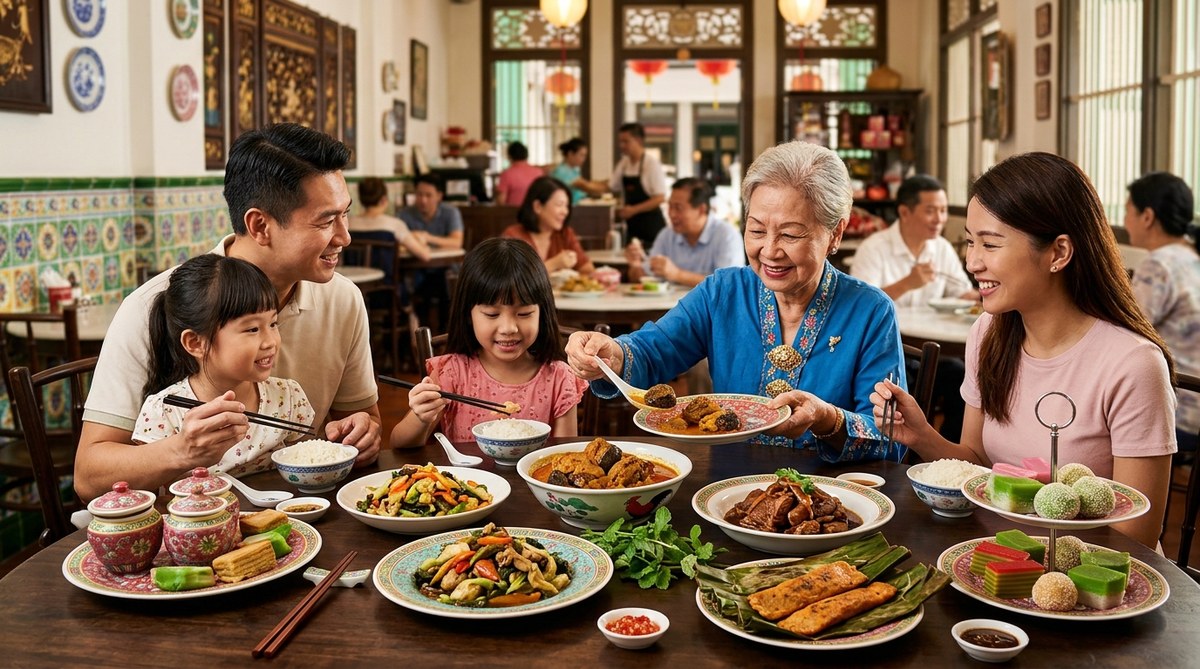
Chilli Padi Nonya Restaurant in Joo Chiat offers home-style cooking without the museum atmosphere. Families run this type of establishment, cooking recipes passed down through generations. The environment feels casual, and portions tend to be generous.
Kim Choo Kueh Chang started as a rice dumpling specialist but now serves full Peranakan meals. Their handmade kueh (traditional cakes) remain a highlight, perfect for dessert or taking back to your hotel.
Some hawker centres include Peranakan stalls, though they’re less common than Chinese, Malay, or Indian options. When you find them, they typically offer simplified versions of complex dishes at much lower prices. The ultimate guide to hawker centres in Singapore can help you navigate these food centres like a local.
How to Order Like You Know What You’re Doing
Peranakan restaurants operate differently from typical tourist-friendly establishments.
-
Start with one or two signature dishes per person. Peranakan food comes rich and heavily spiced. Ordering too much leads to waste and palate fatigue.
-
Ask about spice levels before ordering. Some dishes traditionally come very spicy. Restaurants can often adjust the heat, but you need to request this when ordering, not after the food arrives.
-
Order rice separately. Unlike Western meals, rice doesn’t automatically accompany main dishes. You’ll need to order steamed white rice to balance the intense flavours.
-
Share everything. Peranakan dining follows the communal Asian style. Order different dishes and share them family-style rather than each person getting their own plate.
-
Request recommendations based on your preferences. Tell the server if you prefer seafood over meat, or if you want milder flavours. They can guide you better than randomly pointing at menu items.
Staff at authentic Peranakan restaurants genuinely want you to enjoy the food. They’ll explain unfamiliar ingredients and suggest combinations that work well together.
“Don’t be afraid to ask questions about the dishes. Peranakan cooking involves techniques and ingredients that even Singaporeans unfamiliar with the cuisine don’t recognize. A good restaurant will happily explain what buah keluak tastes like or why the rempah takes hours to prepare.” — Chef Benjamin Seck, Peranakan cooking instructor
Common Mistakes That Mark You as a Tourist
Avoid these missteps that signal you haven’t done your research.
| Mistake | Why It’s Wrong | What to Do Instead |
|---|---|---|
| Comparing it to Thai food | Peranakan cuisine predates modern Thai food culture and developed independently | Appreciate it as its own distinct tradition |
| Expecting it at every hawker centre | Peranakan food requires time-intensive preparation unsuitable for most hawker operations | Visit specialized restaurants or research which hawker stalls actually serve it |
| Ordering only the “safe” dishes | You miss the unique flavours that define the cuisine | Try at least one challenging dish like buah keluak |
| Asking for chopsticks | Traditional Peranakan meals use spoon and fork | Use the provided cutlery |
| Photographing without permission in heritage restaurants | Some establishments display family heirlooms and antiques | Ask before taking photos of the interior |
| Assuming all spicy food tastes the same | Peranakan spice blends differ significantly from Indian, Thai, or Chinese-Sichuan heat | Pay attention to the specific aromatics and flavour layers |
The biggest mistake involves treating Peranakan cuisine as just another Asian food option to tick off your list. The culture, history, and family traditions embedded in each dish deserve more attention than a rushed meal between tourist attractions.
Planning Your Peranakan Food Journey
Smart timing and location choices make a significant difference in your experience.
Visit Katong and Joo Chiat on weekday afternoons to avoid weekend crowds. The first-timer’s guide to navigating Singapore explains the neighbourhood layout and public transport connections.
Budget appropriately for this type of dining. Heritage restaurants charge more than hawker centres but less than fine dining establishments. Expect to pay S$15 to S$30 per person for a satisfying meal at mid-range Peranakan restaurants. Michelin-starred options cost S$80 to S$150 per person.
The cost breakdown for a Singapore holiday includes restaurant categories to help you allocate your dining budget.
Book reservations for popular restaurants, especially for weekend dinners. Many Peranakan establishments occupy small shophouses with limited seating. Walk-ins often face 30 to 60-minute waits during peak hours.
Combine your Peranakan food experience with cultural activities in the same area. The Peranakan Museum on Armenian Street and the Katong Antique House both offer context that deepens your appreciation of the cuisine.
Weather doesn’t significantly affect indoor dining, but Singapore’s tropical climate means you’ll want to dress comfortably. The weather and packing guide covers what to wear for walking between restaurants and cultural sites.
Beyond Restaurants: Markets and Cooking Classes
Several options exist for hands-on engagement with Peranakan food culture.
Katong Market (officially Haig Road Market & Food Centre) operates as a wet market in the morning and food centre throughout the day. Local Peranakan families shop here for fresh ingredients. Walking through the market stalls shows you the raw materials that become the complex dishes you eat at restaurants.
Cooking classes provide the most immersive experience. Several schools in Singapore teach Peranakan cooking techniques, though they require advance booking and cost more than simply eating out.
These classes typically last three to four hours. You’ll learn to pound rempah by hand, understand the layering of flavours in different dishes, and take home recipes you can attempt in your own kitchen.
The physical effort required surprises most participants. Pounding spices manually for 30 minutes gives you tremendous respect for the cooks who do this for every dish.
Some heritage hotels offer Peranakan cooking demonstrations as part of their cultural programming. These shorter sessions don’t involve hands-on cooking but provide interesting background on the cuisine’s history and techniques.
Spice shops in Little India and Chinatown sell the specialized ingredients needed for Peranakan cooking. Staff can identify items like candlenuts, galangal, and tamarind paste if you want to bring ingredients home.
Neighbourhood Considerations for Food-Focused Stays
Your accommodation location affects how easily you can access authentic Peranakan dining.
Staying in or near Katong and Joo Chiat puts you within walking distance of the highest concentration of Peranakan restaurants and cultural sites. The neighbourhood feels more residential and less touristy than central Singapore.
However, this area sits further from major attractions like Marina Bay and Sentosa. The MRT connection requires a bus ride or walk from Paya Lebar or Eunos stations.
The guide to choosing between Marina Bay and Orchard Road hotels explains the trade-offs between central locations and neighbourhood character.
City centre hotels provide easier access to all of Singapore’s attractions but require deliberate trips to Peranakan food areas. Budget extra time for travel when planning your dining schedule.
Some boutique hotels recommended by locals incorporate Peranakan design elements and can point you toward authentic dining options.
The charming Tiong Bahru neighbourhood offers a different heritage experience with some Peranakan influence, though Katong remains the epicentre of this specific culture.
Reading the Menu: Ingredient Decoder
Understanding key ingredients helps you make informed choices.
Buah keluak: Black Indonesian nuts with earthy, slightly bitter flavour. Requires extensive preparation to remove toxins. Appears in ayam buah keluak.
Tamarind: Provides the sour note in many gravies and sambals. Creates the tangy balance against rich coconut milk.
Galangal: Related to ginger but with a sharper, more medicinal flavour. Essential in most rempah.
Candlenuts: Oily nuts that thicken and enrich sauces. Cannot be eaten raw.
Belacan: Fermented shrimp paste that adds deep umami. The smell during cooking is intense but mellows in the finished dish.
Gula melaka: Palm sugar that provides caramel-like sweetness in both savoury dishes and desserts.
Daun kesom: Vietnamese coriander with a distinctive flavour that appears in laksa and some sambals.
Blue pea flowers: Natural food colouring that creates the blue-tinted rice served at some traditional meals.
Restaurants rarely list these ingredients in detail on English menus. Knowing them helps you ask intelligent questions and understand what you’re tasting.
The Cultural Context That Enriches Every Bite
Peranakan cuisine carries meanings beyond nutrition and pleasure.
The food represents a unique identity that emerged from intercultural marriage. Early Chinese traders who settled in the Malay archipelago married local women, creating a distinct community called Peranakans or Straits Chinese.
The women, known as Nonyas, developed this cuisine by adapting Chinese ingredients and cooking methods to local Malay spices and techniques. The men, called Babas, typically handled business while Nonyas managed households and refined the culinary traditions.
This gender dynamic meant that cooking skills passed from mother to daughter through hands-on training rather than written recipes. Each family developed slight variations in their versions of standard dishes.
The time investment required for proper Peranakan cooking demonstrated a family’s status and the Nonya’s dedication to her household. Serving elaborate meals at important occasions showed respect for guests and pride in cultural heritage.
Modern Peranakan restaurants preserve these traditions as the number of home cooks maintaining the practices declines. Younger generations often lack the time or interest to spend hours pounding rempah and slow-cooking complex dishes.
When you eat at an authentic Peranakan restaurant, you’re participating in active cultural preservation. The hidden cultural gems in Singapore include several Peranakan heritage sites worth visiting alongside your dining experiences.
Dietary Considerations and Adaptations
Peranakan cuisine traditionally accommodates fewer dietary restrictions than modern restaurants expect.
Vegetarian options exist but remain limited. Chap chye and some kueh provide meat-free choices, but many vegetable dishes include belacan (shrimp paste) or dried shrimp for flavour. Strict vegetarians need to ask detailed questions about ingredients.
Pork appears frequently, making the cuisine challenging for Muslim and Jewish diners. Some restaurants offer chicken or seafood versions of traditionally pork-based dishes, though purists argue these adaptations change the fundamental character of the food.
Coconut milk and nuts feature heavily, creating problems for those with allergies. Candlenuts appear in most rempah. Peanuts garnish several dishes. Always inform the restaurant of allergies when ordering.
Gluten-free diners face moderate challenges. Rice and rice noodles form the base of most dishes, but soy sauce and fermented bean pastes contain gluten. Some restaurants can modify dishes, while others cannot maintain the authentic flavour profile without these ingredients.
The spice levels can be intense for those with sensitive stomachs. Request mild versions when ordering, and eat rice with every bite to temper the heat.
Bringing the Experience Home
Several options exist for continuing your Peranakan food journey after leaving Singapore.
Packaged spice pastes and sauces from brands like Prima Taste offer simplified versions of traditional dishes. You can find these at Changi Airport or major supermarkets. They won’t match restaurant quality but provide a taste of the cuisine.
Cookbooks by Peranakan chefs include detailed recipes and cultural context. “The New Mrs Lee’s Cookbook” and “Shiok! Exciting Tropical Asian Flavours” both explain techniques clearly enough for home cooks to attempt.
Specialty Asian grocery stores in major cities worldwide stock some key ingredients. You’ll need to substitute items like galangal (use extra ginger) and daun kesom (use regular coriander and mint), but approximations are possible.
The pounding technique requires either a large granite mortar and pestle or acceptance that a food processor will produce different results. Many serious home cooks who fall in love with Peranakan cuisine invest in proper equipment.
Online Peranakan cooking communities share tips for ingredient substitutions and technique troubleshooting. These groups connect enthusiasts worldwide who maintain the cooking traditions far from Singapore.
Making Peranakan Cuisine Part of Your Singapore Story
Peranakan cuisine Singapore offers more than just another meal during your trip.
The food connects you to centuries of cultural fusion, family traditions, and culinary craftsmanship that you won’t experience anywhere else. Taking time to understand the context, trying challenging dishes, and visiting authentic establishments transforms eating into cultural education.
Start with one good meal at a heritage restaurant. Pay attention to the flavours, ask questions, and let the experience unfold without rushing. Whether you’re staying in family-friendly hotels or exploring the city solo, Peranakan dining fits naturally into a thoughtfully planned Singapore visit.
The cuisine rewards curiosity and openness to unfamiliar flavours. Your first bite of ayam buah keluak might confuse your palate, but by the third or fourth, you’ll start to understand why Peranakans treasure this dish. That progression from confusion to appreciation mirrors the broader experience of engaging deeply with any culture different from your own.