How to Experience Chinatown Like a Local
<How to Experience Chinatown Like a Local in Singapore (2026)
Chinatown is one of Singapore’s most visited districts, but too often travellers stick to the main streets and miss the real heart of the neighbourhood. The pagoda-roofed shophouses and the glowing lanterns are beautiful, yes. Yet the true Chinatown pulse beats in its back lanes, wet markets, and kopitiams where uncles sip coffee for hours. You want to experience this place like a local, not like a tour group. Good. This guide strips away the gimmicks and shows you where to eat, walk, and linger without the crowds.
Forget the main drags of Pagoda Street and Trengganu Street. Instead, start your day at a wet market like Hong Lim, walk the lesser-known lanes of Club Street and Bukit Pasoh, and eat where workers queue for their lunch. Avoid the pagoda-roofed malls for souvenirs and head to the hidden shophouse galleries. The best Chinatown experience is the one you create after 7am with a cup of kopi and a plate of chwee kueh.
Why Chinatown Is More Than Just a Tourist Attraction
Many visitors see Chinatown as a single photo stop. They wander through the Chinese Heritage Centre, buy a keychain, and leave. Locals know better. This district is a living cultural corridor that spans several sub-areas: Kreta Ayer, Telok Ayer, Tanjong Pagar, and Bukit Pasoh. Each has its own character.
The old shophouses here house everything from traditional Chinese medicine halls to modern art galleries. The temples are active, not museum pieces. On a weekday morning, you will see devotees lighting joss sticks at the Thian Hock Keng Temple, one of the oldest Hokkien temples in Singapore. Later, the same street transforms into a lunch spot for office workers from the nearby financial district.
This is not a static heritage park. It is a neighbourhood that changes rhythm throughout the day. To experience it like a local, you need to match your timing with those rhythms.
Where to Eat Like a Local
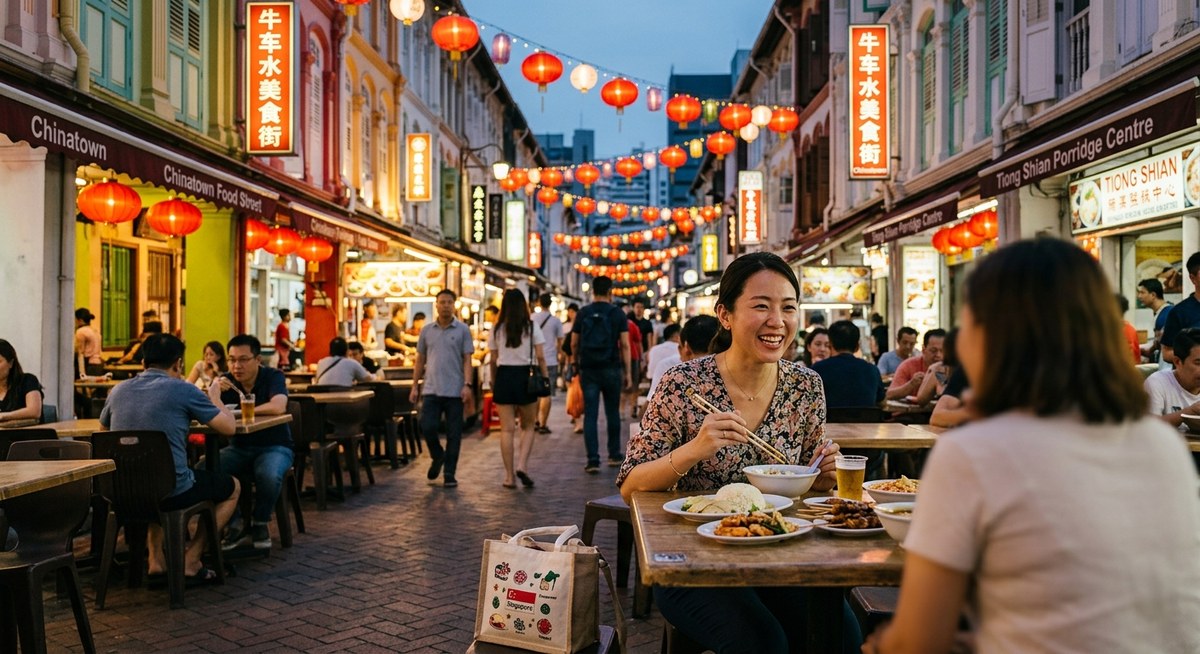
Forget the overpriced restaurants with English menus and air conditioning. Real Chinatown food happens in hawker centres and coffeeshops where the queue tells you everything.
Hawker Centres Worth Your Time
- Hong Lim Market & Food Centre – This is a favourite among office workers and retirees. Try the famous “Ah Khoon” Fried Hokkien Prawn Mee or the “Outram Park” Char Kway Teow. Arrive before 11am to avoid the lunch rush.
- Maxwell Food Centre – Yes, it is popular with tourists, but there is a reason. Go at 3pm when the Tian Tian Hainanese Chicken Rice stall has shorter queues. Or skip chicken rice entirely and head to the popiah stall at row 2.
- Chinatown Complex Food Centre – This giant hawker centre has over 200 stalls. Look for the Michelin-recommended “Liao Fan” Hong Kong Soya Sauce Chicken Rice & Noodle. The queue moves fast, and the chicken is silky.
Hidden Food Stalls Off the Main Streets
| Stall / Location | What to Order | Insider Tip |
|---|---|---|
| Yong He Eating House (Smith Street) | Soy milk and fried dough fritter | Breakfast only, closes by noon |
| Traditional Nasi Padang (Keong Saik Road) | Beef rendang, sayur lodeh | Look for the queue outside the yellow shophouse |
| Ah Kuan Fried Kway Teow (Tanjong Pagar Plaza) | Fried kway teow with cockles | Cash only, $4 a plate |
| Seow Choon Hua Eating House (Sago Street) | Yong tau foo (choose your own) | Bring your own container to save 20 cents |
One tip that locals swear by: always check if a stall has a queue of elderly aunties or uncles. If they are queuing, the food is good. If the queue is full of tourists, walk past.
A Morning Walk Through Chinatown’s Secret Alleys
The best way to see Chinatown like a local is on foot, starting early before the heat and crowds arrive. Follow this sequence.
-
Start at the Chinatown Heritage Centre (7:30am). Do not go inside yet. Instead, walk down the back alley behind the centre, opposite the Buddha Tooth Relic Temple. This narrow lane is lined with old tradesmen: a metal engraver, a Chinese calligraphy master, and a man who repairs bamboo furniture. They open around 8am.
-
Cut through to Smith Street via the wet market. The wet market under the Chinatown Complex sells fresh produce, live seafood, and dried goods. It is loud, wet, and authentic. Locals do their grocery shopping here. Walk through quickly and exit onto Smith Street.
-
Turn right onto Sago Lane, then left onto Teck Lim Road. This stretch has beautifully preserved shophouses, many converted into independent cafes and galleries. Stop at The Painted Cloak for a coffee in a courtyard garden. Few tourists know about it.
-
Continue to Club Street and Bukit Pasoh. These two streets form the heart of the hipster Chinatown. Look up at the intricate window shutters and the occasional street art mural. Club Street is quiet on weekday mornings but comes alive at night.
-
End at the Thian Hock Keng Temple (around 10am). By now the temple is open, and you can watch daily prayers. Sit on the side bench for a moment and observe. Locals come to pray for blessings before work. It is a peaceful way to finish your walk.
This route takes about 90 minutes at a leisurely pace. Bring water and an umbrella, because Singapore weather can change in a flash. For more on packing for this climate, read our guide on
Three Common Mistakes Tourists Make
I asked a long-time resident of Chinatown, a retired teacher named Mr. Tan who has lived in the neighbourhood for over 40 years, what he sees visitors get wrong. Here is what he told me.
“Most tourists walk with their eyes on the phone, not the buildings. They miss the small details. Also, they eat at the first place they see with a sign in English. And they never come back after dark. The night market is just cheap plastic toys. The real Chinatown at night is the coffee shops where families eat supper together.”
That quote sums up the three biggest errors. Let us break them down in a table.
| Mistake | Why It Happens | How to Fix It |
|---|---|---|
| Sticking to the five main streets (Pagoda, Trengganu, Sago, Temple, Smith) | Tourist maps highlight them; they are obvious and well-signposted | Use the side streets like Teck Lim, Keong Saik, and Bukit Pasoh |
| Eating at the first hawker stall with a long tourist queue | Visitors assume a long queue equals the best food; locals know queues for “famous” stalls are inflated by TikTok videos | Ask a cleaner or taxi driver where they eat. They will point you to the stall with only locals |
| Visiting only during daylight hours | Tours and blogs recommend morning visits; many leave by 6pm | Stay for supper (9pm onward) at a coffee shop like Tong Ah Eating House on Keong Saik Road, where you can order satay and beer in a relaxed setting |
Insider Tips from a Long-Time Resident
Mr. Tan shared a few more pieces of wisdom that go beyond the obvious.
- Learn to say “kopi” and “teh”. Ordering coffee in Singaporean style is a local ritual. Kopi is coffee with condensed milk. Kopi O is black coffee with sugar. Kopi C is with evaporated milk. Master these and stallholders will warm to you immediately.
- Bring cash. Many of the best eats and small shops do not accept cards or digital payments. $20 in small notes will get you far.
- Visit on a weekday. Weekends are packed with locals too, especially Sunday when many foreign domestic workers gather for their day off. The energy is high, but if you want to walk slowly, choose a Tuesday or Wednesday.
- Look up. The second floors of many shophouses hide beautiful calligraphy, old signs, and even a few clan associations that welcome visitors. The Singapore Chinese Cultural Centre sometimes opens its gallery on the third floor of a shophouse at 130 Cecil Street.
For a deeper understanding of Singapore’s other heritage districts, check our guide on
Where to Stay for the Best Chinatown Experience
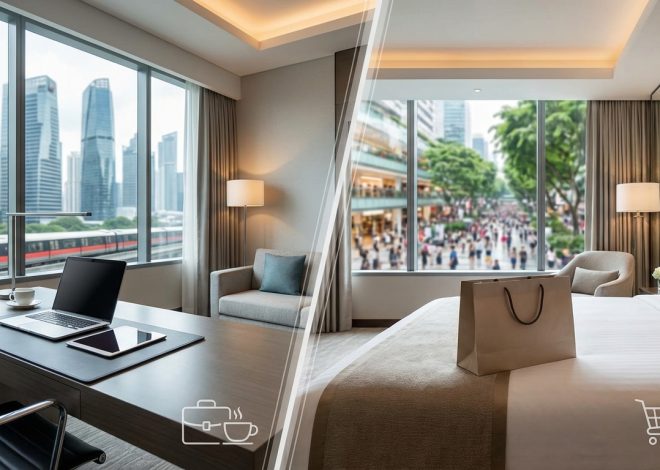
To really live like a local, choose a hotel within walking distance of the neighbourhood. Chinatown has several excellent options, from boutique heritage hotels to modern luxury stays.
-
Hotel Boss is not in Chinatown proper but nearby; however, I recommend something with more character. The Quincy Hotel is popular but a bit far. Instead, look at boutique hotels on Keong Saik Road like Hotel G or Naumi Liora. These properties are converted shophouses with small but stylish rooms. They put you right in the middle of the action.
-
For a quieter stay, consider the Club Street area. The Rucksack Inn is a hostel for budget travellers, but there is also KēSa House, a beautifully restored pre-war shophouse hotel. It offers self-contained studio rooms that feel like a local apartment.
-
If you prefer more space and amenities, the Amara Singapore at Tanjong Pagar is a five-star option a five-minute walk from Chinatown’s edge. It has a pool and good dining.
We have a curated list of that includes several Chinatown options. Staying here means you can start your morning walk at 7:30am without needing a taxi or MRT ride.
Make Your Chinatown Visit Truly Unforgettable
The secret to experiencing Chinatown like a local is not complicated. It is about slowing down, choosing side streets over main roads, and trusting the wisdom of aunties and uncles who have been eating at the same stall for decades. Skip the souvenir shops selling the same plastic Merlion keychain you can find anywhere. Instead, buy a bag of fresh spice from the wet market, or a hand-painted porcelain bowl from a little shop on Teck Lim Road.
Plan your visit with intention. Eat where you see a queue of office workers. Walk the alleys that look too narrow to lead anywhere. And when the sun gets too hot, duck into a kopitiam, order a Kopi-O Peng (iced black coffee with sugar), and just sit. Watch the neighbourhood do its daily dance. That is how you become not a tourist, but a temporary local.
Now go and experience Chinatown the right way. Bring your curiosity, leave your schedule behind, and let the streets guide you.