Walking Through History: Discovering Singapore’s Chinatown, Little India, and Kampong Glam
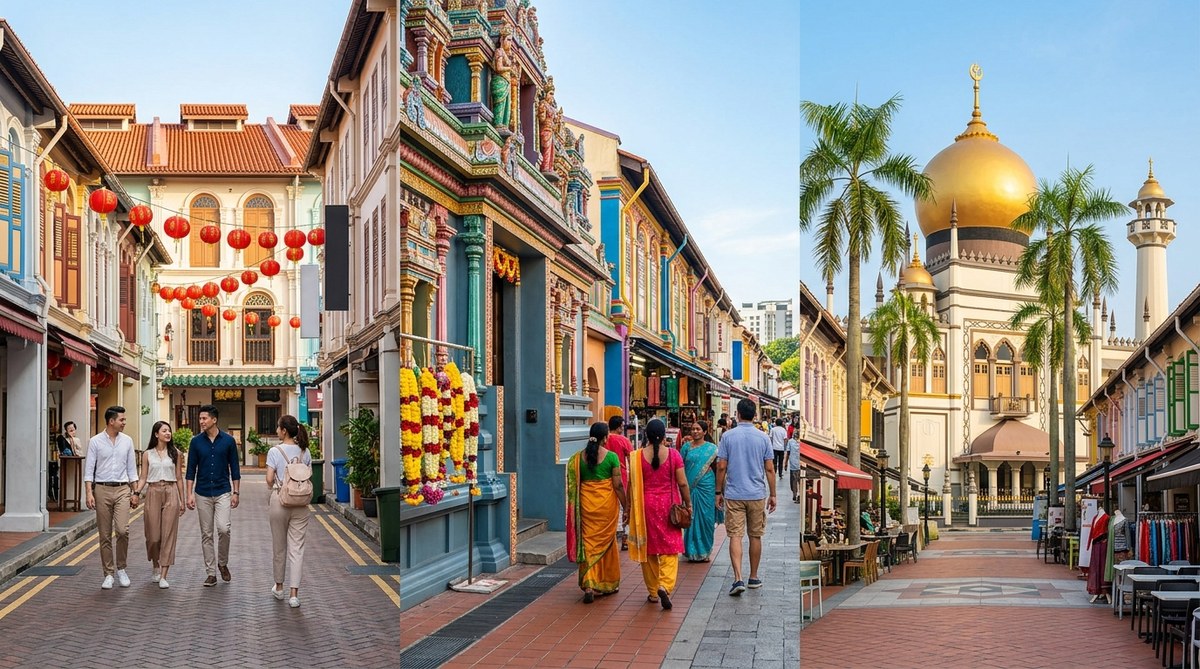
Singapore is a city that tells its story through its neighbourhoods. You can feel it change as you move from one district to the next. The smells shift from joss sticks to curry spice to rich coffee. The architecture transforms from colonial shophouses to colourful Hindu temple gopurams to the grand Sultan Mosque. A Chinatown Little India Kampong Glam walking tour is the best way to experience this living museum. And the good news is that all three districts sit close to each other, connected by the Mass Rapid Transit and short bus hops. You can cover the highlights in a single day if you plan well, or stretch it over two days for a more relaxed pace.
A walking tour through Chinatown, Little India, and Kampong Glam lets you experience Singapore's multicultural heritage in one efficient route. Start in Chinatown for history and temples, continue to Little India for colour and spice, and end in Kampong Glam for Malay culture and sunset vibes. The entire loop takes about five to six hours with stops for food and photos. Wear comfortable shoes and carry water because the tropical heat is real.
Why a Walking Tour Through All Three Enclaves Works Best
Singapore is compact. That is its superpower. You can stand in Chinatown and see the financial district towers rising behind ancient temple roofs. A fifteen minute MRT ride drops you into Little India, and another ten minutes brings you to Kampong Glam. Grouping these three districts into one walking tour saves you time and gives you a richer understanding of how Singapore's different communities have shaped the city.
Each district preserves a distinct piece of the island's history. Chinatown tells the story of Chinese immigrants who arrived from the 1820s onward. Little India reflects the Tamil and South Asian communities that built much of the colonial infrastructure. Kampong Glam was the seat of Malay royalty and remains the spiritual heart of the Muslim community. Walking through all three in one day shows you how these cultures coexist, overlap, and influence each other.
Getting Started Before You Step Out
A little preparation goes a long way when the temperature hits 32 degrees Celsius with 80 percent humidity. Here is how to set yourself up for a comfortable day.
-
Start early. Aim to be at your first stop by 9am. The morning light is softer, the crowds are thinner, and the heat is still manageable. Most shops and temples open around 9am or 10am.
-
Plan your route based on your starting point. If you are staying in the city centre, start with Chinatown. If you are near Bugis or Lavender, start with Kampong Glam and work backwards. The loop works in any direction.
-
Use the MRT between districts. Chinatown station (DT19 / NE4) connects to Little India station (NE7 / DT12) on the same purple line. From Little India, you can walk to Kampong Glam in about fifteen minutes, or take the MRT one stop from Bugis station (EW12 / DT14).
-
Pack light but smart. A small backpack with water, sunscreen, an umbrella, and a light scarf for temple visits will save you from buying overpriced drinks midway.
-
Carry some cash. Many hawker stalls and small shops in these districts still prefer cash. An Octopus style EZ-Link card works for public transport.
Here is what you should bring in your day pack:
- A refillable water bottle (there are public water coolers at most MRT stations and museums)
- A foldable umbrella or a cap (the sun is intense, and sudden showers happen year round)
- Modest clothing for temple entry (long pants or a sarong for knees and shoulders)
- A power bank for your phone (you will use GPS and take plenty of photos)
- Comfortable walking shoes with good grip (some temple floors and alleyways can be uneven)
If you are still planning your trip, our guide on how to navigate Singapore's MRT like a local will help you get around with confidence.
Chinatown Where Tradition Meets the Modern City
Chinatown is not a single neighbourhood. It is a collection of sub districts, each with its own character. The main areas are Kreta Ayer (around the Buddha Tooth Relic Temple), Telok Ayer (the oldest Chinese settlement area), and Tanjong Pagar (known for its conserved shophouses and trendy bars).
Start at the Buddha Tooth Relic Temple and Museum. This grand Tang dynasty style temple opened in 2007, but it houses a relic that dates back over 2,000 years. The museum inside is worth a slow walk. Admission is free. Dress respectfully and keep your voice low.
From there, walk down Smith Street. It becomes a pedestrian street in the evenings, but during the day you will find hawker stalls selling everything from Hainanese chicken rice to roast duck. The Chinatown Complex Food Centre on Smith Street is one of the best hawker centres in Singapore. Try the Michelin starred Liao Fan Hawker Chan if the queue is short.
Continue to Telok Ayer Street. This stretch holds some of Singapore's oldest religious buildings, including the Thian Hock Keng Temple (a Chinese temple built in 1840), the Nagore Durgha Shrine, and the Al Abrar Mosque. The street itself tells the story of early Chinese immigrants who worshipped alongside Malay and Indian neighbours.
Sri Mariamman Temple on South Bridge Road is Singapore's oldest Hindu temple, dating back to 1827. Its towering gopuram is covered in colourful sculptures of Hindu deities. Non Hindus are welcome inside, but you must remove your shoes and cover your shoulders.
End your Chinatown leg at Ann Siang Hill or Club Street. These quiet lanes are lined with beautifully restored shophouses, independent boutiques, and rooftop bars. Grab a coffee at a cafe here before you move on.
Little India A Burst of Colour and Spice
From Chinatown, take the MRT from Chinatown station to Little India station. The journey takes about ten minutes. Step out of the station, and you are immediately hit by a wave of colour, sound, and fragrance.
Start at Serangoon Road, the main artery. The street is lined with gold jewellery shops, textile stores, and spice merchants. The air smells of jasmine garlands, turmeric, and fried chillies. Do not rush. Let yourself get pulled into a shop that sells Indian sweets or a stall that piles fresh marigold flowers.
Tekka Centre on Buffalo Road is a must stop. This wet market and hawker centre is one of the best places in Singapore to eat South Indian food. Try the fish head curry, the thosai, and the masala tea. The market section downstairs sells fresh produce, spices, and seafood that will make you want to cook.
Sri Veeramakaliamman Temple on Serangoon Road is dedicated to the Hindu goddess Kali. The temple was built in 1881 and features intricate carvings of the goddess in her many forms. Photography is allowed but be respectful of worshippers.
Take a walk down Little India Arcade and Campbell Lane. These narrow lanes are packed with shops selling bangles, incense, Bollywood music, and traditional Indian clothing. It is a good place to pick up affordable souvenirs.
Mustafa Centre on Syed Alwi Road is open 24 hours and sells everything from electronics to groceries to gold bars. Even if you do not buy anything, walking through the maze of aisles is an experience. It is especially lively after midnight.
For a quieter moment, visit Tan Teng Niah House on Kerbau Road. This candy coloured villa was built in 1900 and is one of the last surviving Chinese villas in Little India. The pastel pink and turquoise facade makes it one of the most photographed spots in the district.
Before you leave, grab a snack at Banana Leaf Apolo or Komala Vilas for authentic South Indian vegetarian food. The banana leaf rice meal is a filling and affordable option.
Kampong Glam The Malay Heritage Hub
From Little India, you can walk to Kampong Glam in about fifteen minutes. Head south on Serangoon Road, turn right onto Arab Street, and you will see the golden dome of the Sultan Mosque ahead of you. This is the historic Malay quarter, named after the gelam tree that grew in the area.
The centrepiece of Kampong Glam is the Sultan Mosque, also known as Masjid Sultan. Built in 1824 and rebuilt in 1928, the mosque features a massive gold dome and a prayer hall that can hold up to 5,000 worshippers. Non Muslims can enter the compound and the public areas. Dress modestly and remove your shoes.
Arab Street is the main commercial strip, lined with fabric shops, carpet dealers, and Middle Eastern restaurants. The street has a more relaxed, slightly bohemian feel compared to the hustle of Little India.
Haji Lane is the narrow alley that has become a social media star. The lane is packed with independent boutiques, tattoo parlours, and cafes with colourful murals. It gets crowded on weekends but is worth a walk for the photos alone.
Beach Road runs along the edge of Kampong Glam and offers a different view. The Malay Heritage Centre sits in the former Istana Kampong Glam, the palace of the last Malay sultan. The museum inside covers Malay history and culture in Singapore. The grounds are free to enter. The museum has a small admission fee.
For food, Zam Zam Restaurant on North Bridge Road has been serving biryani and murtabak since 1908. The beef murtabak with a side of curry is a local classic. Warong Nasi Pariaman on Malay Street serves authentic Padang style rice dishes.
End your Kampong Glam visit at Arab Street or Haji Lane in the late afternoon. The golden hour light on the mosque dome and the shophouses is beautiful. Grab a cup of teh tarik (pulled milk tea) at a roadside stall and watch the neighbourhood wind down.
Comparing the Three Districts at a Glance
| Aspect | Chinatown | Little India | Kampong Glam |
|---|---|---|---|
| Best time to visit | Morning to early afternoon | Late morning to evening | Late afternoon to sunset |
| Top landmark | Buddha Tooth Relic Temple | Sri Veeramakaliamman Temple | Sultan Mosque |
| Must try food | Hainanese chicken rice, dim sum | Fish head curry, banana leaf rice | Murtabak, biryani, teh tarik |
| Best for shopping | Chinese tea, herbs, antiques | Gold jewellery, spices, textiles | Batik, fabric, perfume oils |
| Atmosphere | Historic, slightly touristy | Chaotic, colourful, energetic | Relaxed, artistic, spiritual |
| MRT station | Chinatown (DT19 / NE4) | Little India (NE7 / DT12) | Bugis (EW12 / DT14) |
Insider Tips to Make Your Walk Comfortable
"The biggest mistake visitors make is trying to fit all three districts into a single morning. You end up rushing past the details that make each place special. Take your time. Sit down for a meal in each district. Let the neighbourhood breathe." (Local tour guide, conversation on a walking tour, January 2026)
Some practical notes from experience. The tropical sun does not play games. Plan your walking between 9am and 11am, then again after 3pm if you want to avoid the worst heat. The middle of the day is perfect for sitting in a hawker centre with a cold sugarcane juice.
Hydration matters more than you think. Singapore tap water is safe to drink, so refill your bottle at any public water cooler. You will find them at MRT stations, museums, and large shopping centres.
Temple etiquette is simple. Remove your shoes before entering the prayer hall. Cover your shoulders and knees. Do not point your feet at any religious images. Do not touch any statues or offerings. Photography is usually allowed in the main hall but not in the inner sanctum. When in doubt, watch what locals do and follow their lead.
If you prefer a guided experience, many local tour operators offer small group walks that include all three districts. These typically last four to six hours and include food tastings. The guides add context that you might miss on your own.
If you are travelling with children, the walking distances between stops are manageable for older kids. For younger ones, bring a stroller and be prepared for bumpy roads in some parts of Little India. The MRT stations are all wheelchair and stroller accessible.
For more tips on what to pack for year round tropical comfort, check our dedicated guide.
Where to Stay for the Best Access to All Three Districts
Choosing a hotel near the centre of this walking triangle makes your day much easier. The area around Bugis, Bras Basah, and City Hall puts you within walking distance or a short MRT ride from all three districts.
Bugis area is the most convenient. You are ten minutes from Kampong Glam on foot, and the MRT connects you to Chinatown and Little India in under fifteen minutes. Bugis itself has a vibrant street market scene and plenty of mid range hotel options.
City Hall and Bras Basah offer more upscale choices. You are a short walk from the Singapore Art Museum, the National Museum, and the Cathedral of the Good Shepherd. The MRT interchange at City Hall gives you direct access to the purple and green lines that serve all three districts.
If you prefer a quieter base, consider Tanjong Pagar or Outram Park. These areas are on the edge of Chinatown and give you a more local feel. The hotels here tend to be smaller boutique properties with character.
For more options, see our list of 11 best boutique hotels in Singapore that locals actually recommend. These properties are well reviewed for their location and service quality.
Your Itinerary at a Glance
Here is a sample one day schedule that covers the highlights without feeling rushed.
- 9:00am Start at Buddha Tooth Relic Temple in Chinatown
- 9:45am Walk through Smith Street and visit Sri Mariamman Temple
- 10:30am Explore Telok Ayer Street and Thian Hock Keng Temple
- 11:30am Lunch at Chinatown Complex Food Centre
- 1:00pm MRT to Little India station
- 1:30pm Visit Serangoon Road and Sri Veeramakaliamman Temple
- 2:30pm Walk through Tekka Centre and Little India Arcade
- 3:30pm Walk to Kampong Glam (15 minutes)
- 4:00pm Visit Sultan Mosque and Malay Heritage Centre
- 5:00pm Explore Haji Lane and Arab Street
- 6:00pm Dinner at Zam Zam Restaurant or Warong Nasi Pariaman
- 7:00pm Sunset photos at Arab Street
This schedule is flexible. If you want more time at any stop, skip the afternoon MRT and walk between all three districts. The total walking distance for the full loop is about 4 to 5 kilometres, which is manageable for most fitness levels.
If you want to extend your stay in any one district, consider adding a second day. Spend one full day in Chinatown and Little India, and a second morning in Kampong Glam followed by a visit to the nearby Singapore Arts Museum or National Library.
Making the Most of Your Cultural Walking Tour
A walking tour through Chinatown, Little India, and Kampong Glam is more than a checklist of sights. It is a way to understand how Singapore became the multicultural city it is today. Each district holds layers of history that reveal themselves when you slow down and pay attention.
Talk to the shopkeepers. Ask the spice seller what goes into a good curry powder. Let the textile shop owner show you how a batik stamp works. Smell the joss sticks burning at the temple entrance. Taste the fresh roti canai as it comes off the griddle. These small moments are what you will remember long after you leave.
If you are planning a longer stay, combine this walking tour with a visit to the Asian Civilisations Museum or the Peranakan Museum for deeper context on the communities you have just explored. Our guide on hidden Peranakan gems in Katong and Joo Chiat makes a great follow up day trip.
Before you head out, check the weather. A sudden tropical shower can interrupt your walk, but it usually passes within twenty minutes. Carry that umbrella, take a deep breath of the rain washed air, and keep going. The streets of Singapore are beautiful in any weather.
Enjoy your walk. Eat well. Take plenty of photos. And if you need a place to rest your feet at the end of the day, we have you covered with hotel recommendations for every budget and style.