How to Eat Your Way Through Singapore’s Little India Like a Local
Little India is a riot of colour, sound, and most importantly, flavour. The air hangs heavy with the scent of spices, frying dough, and sweet jasmine. Walking down Serangoon Road, you will see queues snaking outside old school eateries and families sharing massive banana leaves. This is not a curated tourist show. This is the real heartbeat of Singapore's Indian community, and the food here tells a story of generations. This Little India Singapore food guide will help you skip the obvious tourist traps and eat at the places where locals actually go.
To eat your way through Little India like a local, start at Tekka Market for the freshest thosai and biryani, then hunt down a banana leaf rice lunch at an old school coffee shop. Avoid the famous but overhyped stalls; instead, follow the lunch crowd of Indian office workers. Budget about SGD 10 to 15 per meal, and always use your right hand to eat.
Start your day at Tekka Market
Tekka Market is the heart of Little India's food scene. Head there early, around 7am, when the wet market is buzzing and the hawker centre on the second floor is just warming up. You will find a long queue of locals waiting for the same thing: the famous fish head curry. But do not limit yourself. The true magic of Tekka is the variety of South Indian breakfast items.
Try a masala thosai from one of the older stalls. It arrives crisp, golden, and enormous. Dip it into the three chutneys: coconut, tomato, and the spicy dry powder. Wash it down with a tall glass of teh tarik, the pulled milk tea that is practically a national sport here. The tea is poured from one cup to another to create a frothy top. Watch the aunties do it with the confidence of decades.
For a deeper understanding of hawker dining in general, check out our guide to Singapore's hawker centres. It will help you master the art of chope (reserving a table with a packet of tissues) and ordering without intimidation.
Must-try dishes for the adventurous eater
Little India offers dishes you will not find in a typical Indian restaurant back home. Here are the ones you should not skip:
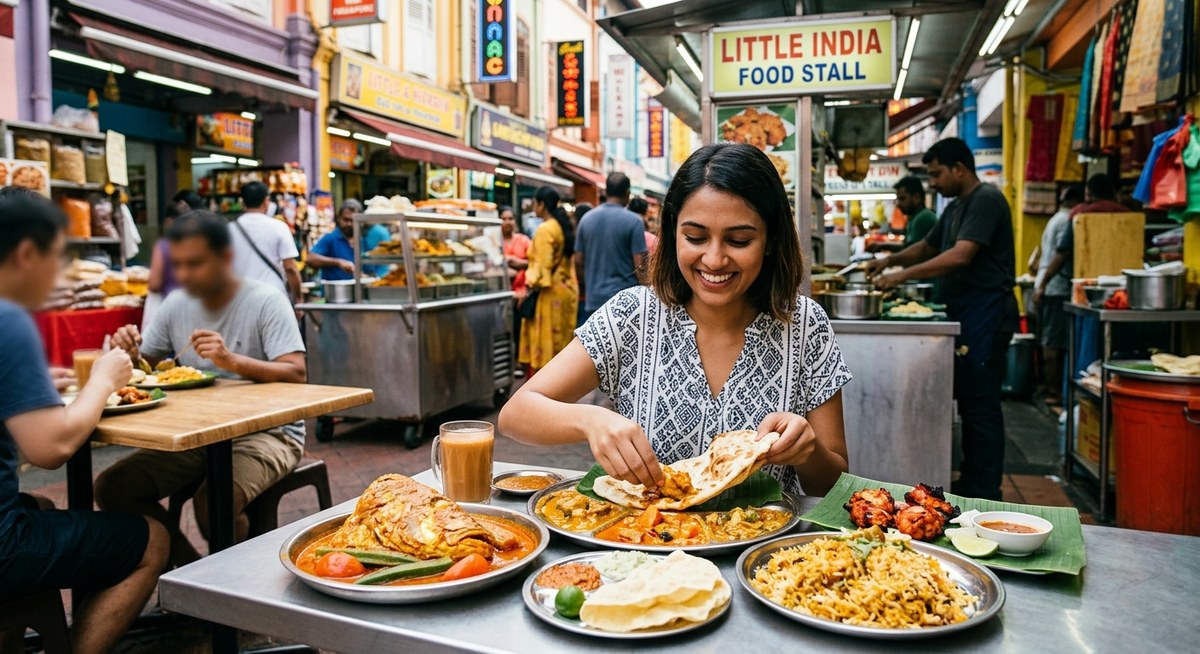
- Fish head curry: A Singapore institution. The curry is tangy, slightly sweet, and loaded with okra and brinjal. Use your fingers to pick meat from the head.
- Biryani: Tekka Market has a stall that sells a truly fragrant mutton biryani. The meat falls off the bone, and the rice is layered with fried onions and saffron.
- Murtabak: A stuffed pancake that is crispy on the outside, soft inside. Choices range from mutton to egg to cheese. Try the one at Zam Zam, but the Tekka version is just as good.
- Putu mayam: A steamed rice noodle cake served with grated coconut and gula melaka (palm sugar). Light and perfect for a mid afternoon snack.
- Appam: Lacy, bowl shaped pancakes with a soft centre. Pair it with a bowl of mutton stew for a meal that feels both familiar and exotic.
- Rojak Indian style: A fried dough fritter salad with a thick, sweet, and spicy peanut sauce. Add some prawn paste for an umami kick.
If you are vegetarian, do not worry. Little India is a paradise for vegetarians. The banana leaf rice lunch is a ritual you must experience.
A practical guide to eating in Little India like a local
Even experienced foodies can make small mistakes that prevent them from having the best experience. Follow this step by step process to eat like a true Singaporean:
- Arrive before 12pm for lunch, or after 1pm for a quieter meal. The lunch rush from nearby offices peaks between 12 and 1. If you want a seat, come early or be prepared to wait.
- Share dishes with your group. Local dining is communal. Order two or three dishes for two people. You will get to try more things and the portions are generous.
- Use your right hand to eat. Practice scooping rice and curry with your fingers. It sounds messy, but it actually enhances the flavour. The restaurant will provide a finger bowl with lemon water.
- Ask for the "special" version. Many stalls have a secret menu or a special version of a dish. For example, at the banana leaf rice place, ask for extra curry or a second serving of dal. It is often free.
- Pay with cash or PayNow. Many older stalls still do not accept cards. Carry some SGD 10 and SGD 2 notes. If you are using a digital wallet, confirm first.
- Avoid the "famous" stalls that have long queues of tourists. Look for the stalls with mostly Indian office workers and construction workers. That is where the real food is.
- Finish with a sweet drink. After a spicy meal, order a glass of falooda (rose milk with vermicelli and basil seeds) or a simple lassi. It will cool you down.
For timing your visit to avoid the worst of the heat, read our month by month guide to Singapore's weather. You will thank me when you are not sweating over your thosai.
Common mistakes and how to avoid them
| Mistake | Solution |
|---|---|
| Ordering the same dish everywhere | Stick to one or two dishes per visit and try different stalls. Every stall has its own masala blend. |
| Asking for less chili | Locals eat spicy. If you can handle it, do not tone it down. The balance of heat is essential. |
| Sitting at the first empty table in Tekka Market | Walk to the back of the second floor. The back rows have fans and less foot traffic. |
| Ordering a drink with ice | The ice is fine (Singapore uses potable water), but if you want maximum flavour, go for no ice. |
| Leaving right after eating | Hang around for 10 minutes. The aunties will offer you a free refill of payasam (sweet milk pudding) or a small piece of dessert. |
The key is to treat each meal as an experience, not just fuel. You will notice that service can seem brusque at some places. That is just the local style. Do not take it personally. The food will speak for itself.
A local's secret: where to find the best banana leaf rice
"Banana leaf rice is about the rice itself," says Ravi, a third generation Tekka market regular. "The best rice is not the plain white one. Go to the stall that uses basmati parboiled with a bit of ghee. And always ask for the 'extra gravy' option. They will pour three different curries over your rice. Vegetable, dal, and fish curry. Then you add your own pickles and papadum."
Ravi's favourite spot is the cluster of stalls near the Tekka Market main entrance, on the ground floor facing Buffalo Road. The one with a yellow sign and a constant queue of taxi drivers. Order the mutton varuval (dry curry) and a side of fried bitter gourd. The bitterness cuts through the richness of the curry. It is a masterclass in balance.
If you are staying in a hotel nearby, you can walk here in five minutes. For a comfortable base close to Little India, check out our recommendations for boutique hotels in Singapore that locals recommend. The area around Jalan Besar and Lavender has charming shophouse hotels that put you right in the food action.
How to pair your food adventure with the right accommodation
Little India is well connected by the MRT, so you can stay anywhere along the Circle Line or North East Line. But for the full experience, book a hotel within walking distance. That way you can eat multiple small meals and return to your room for a quick shower and nap. The heat can be intense, especially during the midday.
Consider staying in a hotel near Farrer Park MRT or Little India MRT. These stations are just one stop away from Serangoon Road. If you are on a budget, the area also has clean hostels and guesthouses that cater to backpackers. For a more premium option, look at the hotels along Lavender Street or the cluster near Mustafa Centre.
Before you book, check our budget breakdown for a Singapore holiday in 2026 to see how much to allocate for food. Little India is one of the most affordable places to eat in Singapore, so you can spend more on accommodation without guilt.
Your Little India food adventure awaits
Little India changes slowly. The same families have been cooking here for decades. The recipes are passed down, and the flavours are consistent. But some stalls close early, or run out of their signature dish by 2pm. So do not wait too long to try them. Go with an open mind, an empty stomach, and a willingness to get your hands dirty.
Make Tekka Market your first stop. Then wander down Clive Street and Belilios Road. Follow the smell of cardamom and frying onions. You will find tiny stalls selling freshly made vadai, crispy samosas, and sweet jalebis. Every corner offers a new taste.
And when you are finally full, walk to the Indian Heritage Centre or simply sit on a bench along Serangoon Road and watch the world go by. That is how locals do it. No rush. No checklist. Just good food and good company.
If you are planning a longer trip and want to explore other neighbourhoods, our first timer's guide to navigating Singapore will help you connect the dots. Use it to plan your days, but always leave room for spontaneous food detours. That is where the magic lives.